

Aardvark
Group: Armory
Family: Orycteropodidae
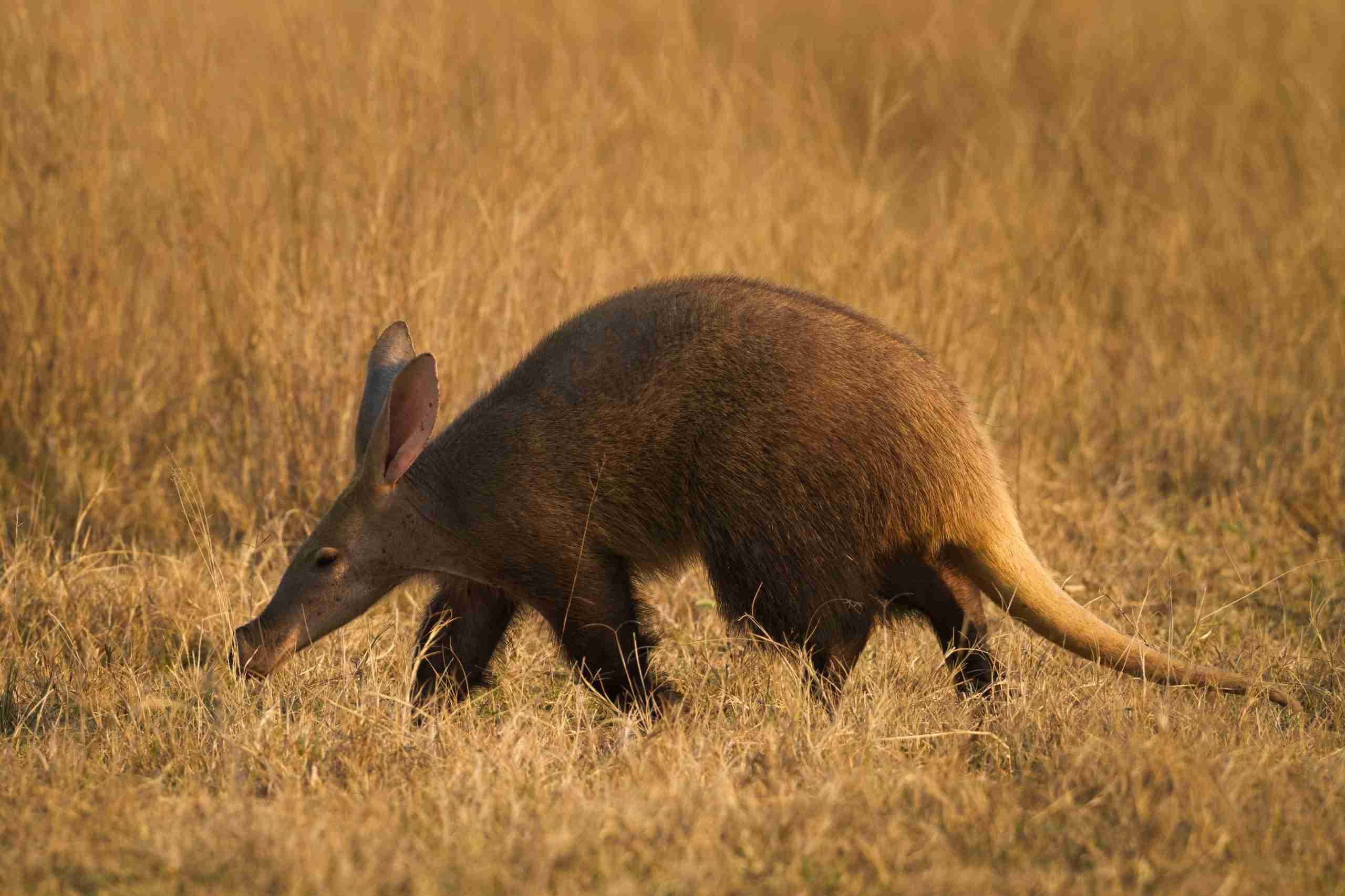
The name Aardvark is Afrikaans which means earth pig or ground pig because of its burrowing habits.
An Aardvark has a long snout that ends with a pig-like nose, rabbit-like ears and a tail similar to a kangaroo’s.
They can weigh up to 82 kg, and reach up to 135 cm in length with an added tail of up to 66 cm. They also have very long tongues, which could reach a total length of 33 cm. Aardvarks have four toes on their front feet and five toes on their back feet.
Aardvarks are solitary animals and only come together to mate. They are also nocturnal.
Aardvarks dig to get food. They dig into ant and termite mounds and lick up bugs with their long tongues. They eat almost exclusively ants and termites, though they sometimes supplement their diets with other insects. The Aardvark’s tough skin protects them from the bites of their meal, and their nostrils seal up to keep out dust and insects.
They can eat up to 50,000 insects each night. Aardvarks swallow their food whole, without chewing it. Instead, food is ground up in a muscular area of its lower stomach.
They rarely drink water and receive most of their moisture from the insects they eat.
Female Aardvarks have a gestation of 7 months and give birth to one cub at a time. Cubs grow up very quickly. At only 6 months they are ready to leave their mothers.
Baboon
Group: Troops
Family: Cercopithecidae
The name Baboon is derived from the old German word beffen, which means to bark.
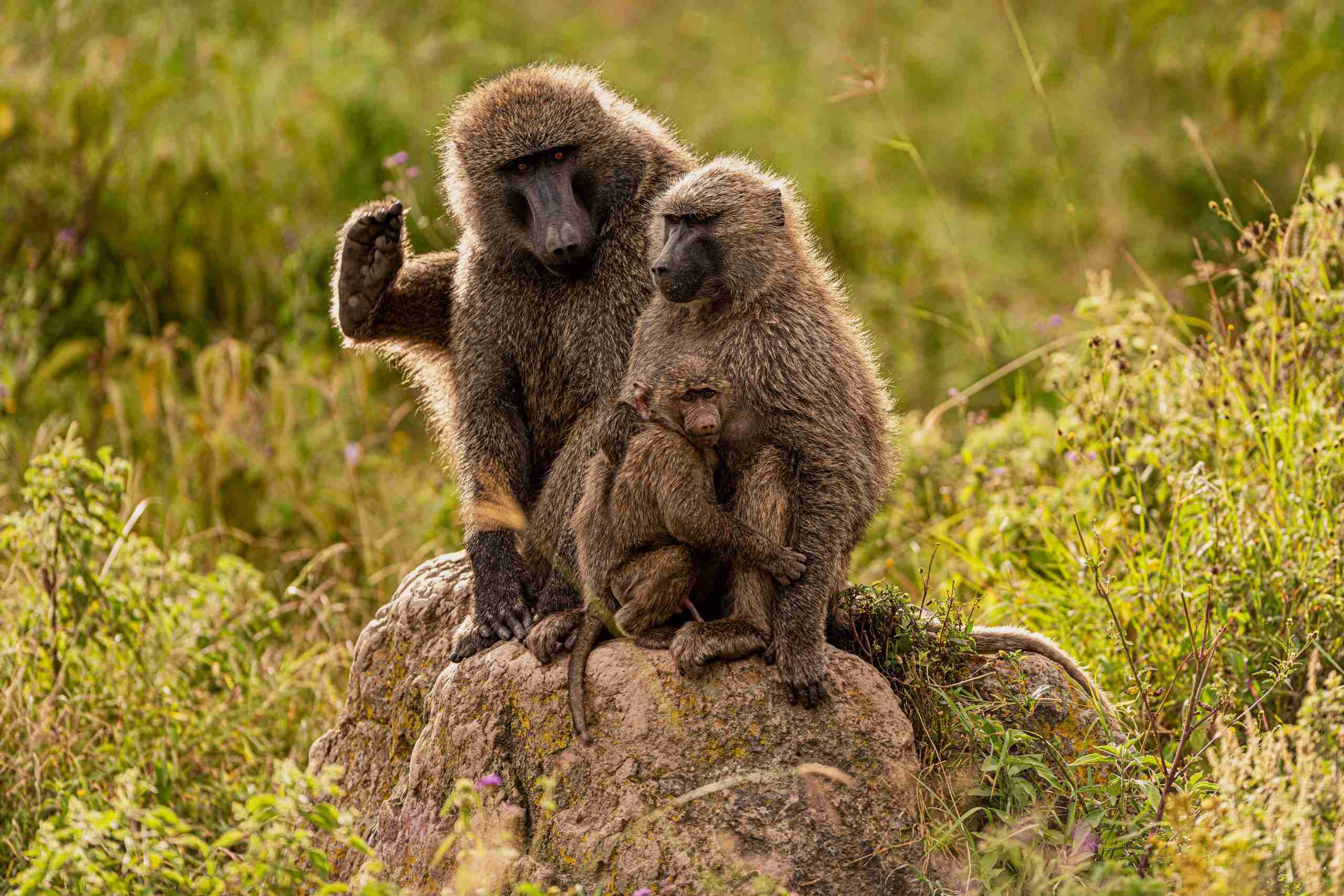
Baboons have tufts of hair on either side of their faces and large, hairless bottoms that can turn red. They can weigh up to 32 kg and reach a height of 86 cm.
Unlike other monkeys, baboons stay on the ground most of the time and only sleep, eat and keep watch in trees. Baboons are very social creatures. Troops can contain up to 300 members, and groom, sleep and protect each other. A dominant male usually runs the troop. Males are usually ranked in dominance by age and size while females are usually ranked by birth order.
As omnivores, baboons eat a wide array of meats and plants. They even eat other monkeys.
Baboons are polygamous in nature and continue mating all around the year with different partners. During the mating season, the male baboon protects the female baboon from other males which often leads to a fight . The female baboon is sexually active only during its cyclical estrus which can last for 30-40 days. Baboons reproduce during this time span, and after a gestation period of 180 days, the female gives birth to a single offspring.
Baboons can live up to 30 years of age in the wild.
Bat-eared Fox
Group: Pack
Family: Canidae
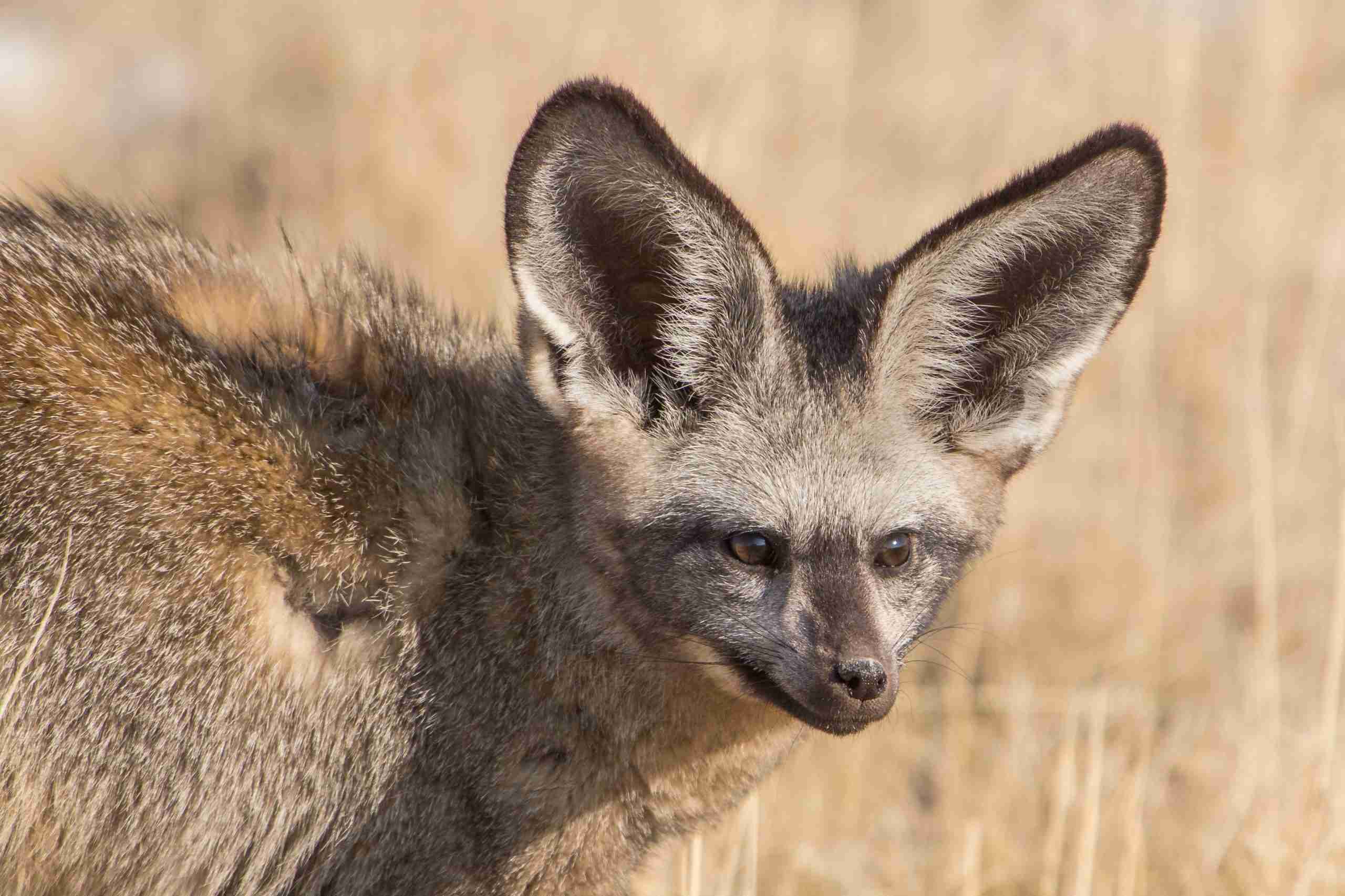
The Bat-eared Fox's name comes from its enormous ears which can grow up to 12 cm long, providing them with a great sense of hearing. They can use these large ears to locate larvae buried underneath the ground.
The Bat-eared Fox is insectivorous, meaning its diet consists of small invertebrates such as ants, termites, spiders, scorpions and crickets. They will also eat small birds, mammals and reptiles. They have extremely pointed teeth, which enables them to quickly and efficiently chew their meals to aid digestion. They seldom drink water as they obtain most of the moisture that they need from their food.
A single fox can eat up to 1.15 million termites each year.
They can reach a height of up to 4 cm and weigh up to 7 kg.
Bat-eared Foxes usually live in groups of up to 5 individuals. They are primarily nocturnal, with most of their activity occurring during the night. They emerge from their underground dens at dusk to feed during the night. A pack has several den holes in its territory, each with many entrances, tunnels, and chambers. The Fox’s claws are made for digging.
Unlike other canids, the male Bat-eared Fox takes on the majority of the parenting once the mother gives birth to up to 6 kits, while the vixen forages for food that maintains her milk production. Bat-eared Foxes are monogamous animals.
Bat-eared Foxes can live up to 13 years of age in the wild.
Blesbok
Group: Herd
Family: Bovidae
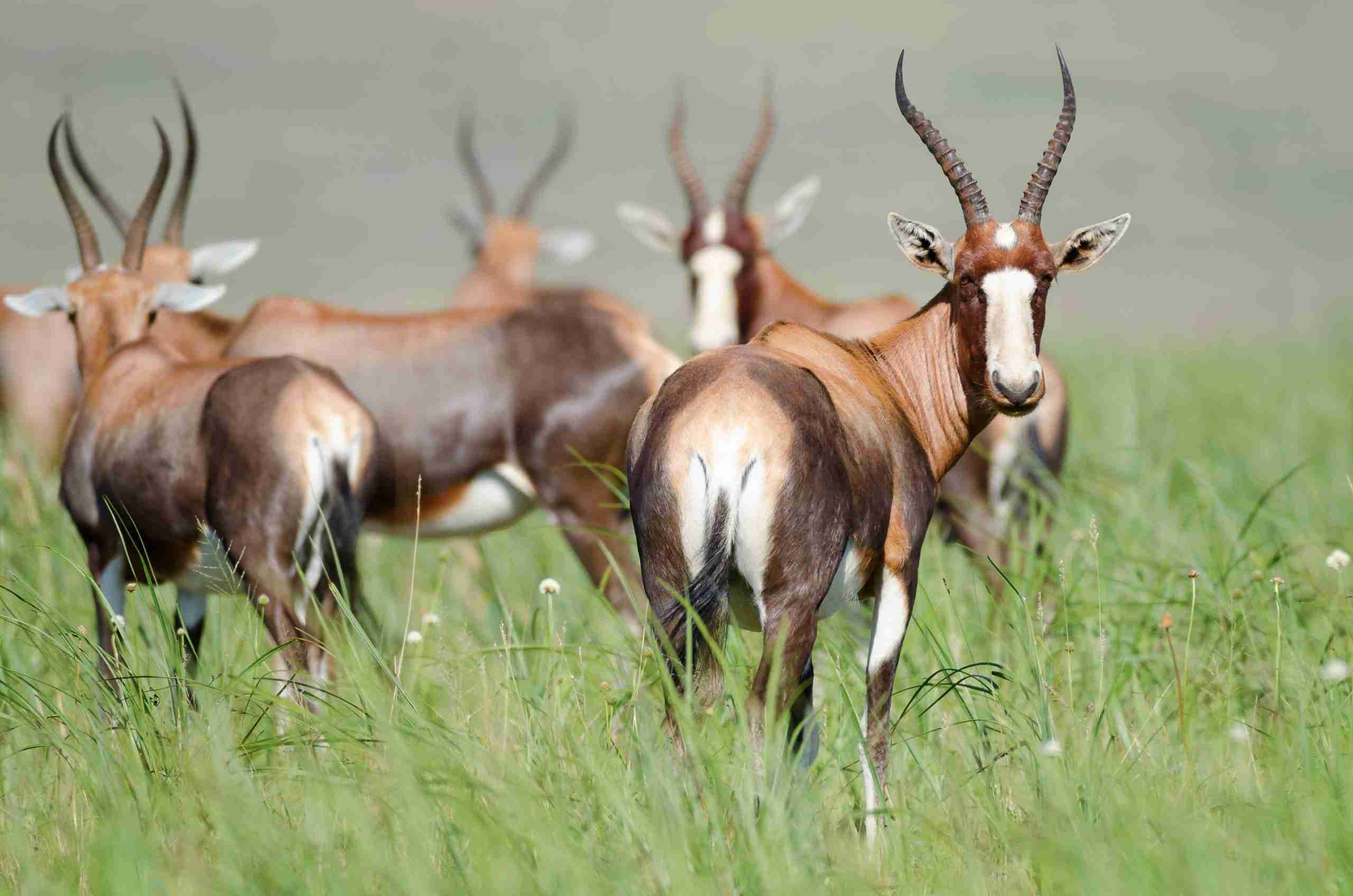
The Blesbok has a distinctive white forehead which inspired the name, as bles is the Dutch word for blaze and the patch on the forehead imitates a flame.
These antelope can grow up to 100 cm in height and weigh almost 80 kg. Making them the smallest of the hartebeest tribe. They can run up to 70 km/h.
There are an estimated 250 000 in the wild and the Blesbok can live up to 17 years of age.
Both the males and females have antlers, and the males’ horns can grow up to 50cm in length.
After a gestational period of 240 days, the ewe gives birth to a single calf. There is no hiding period, like with other antelope, and the calf stays by the mother’s side as soon as it is born. The calf can run with the herd from as little as 30 minutes after birth. The Blesbok keep to small herds that consist of 10 to 25 antelope. Bachelor herds, consisting of younger males live on undefended territory.
Due to their popular meat and shiny hide, they were hunted to near extinction until the 19th century.
Blesbok can interbreed with closely related species of antelope called Bontebok, creating hybrids known as Bontebles.
Blue Duiker
Group: Herd
Family: Bovidae
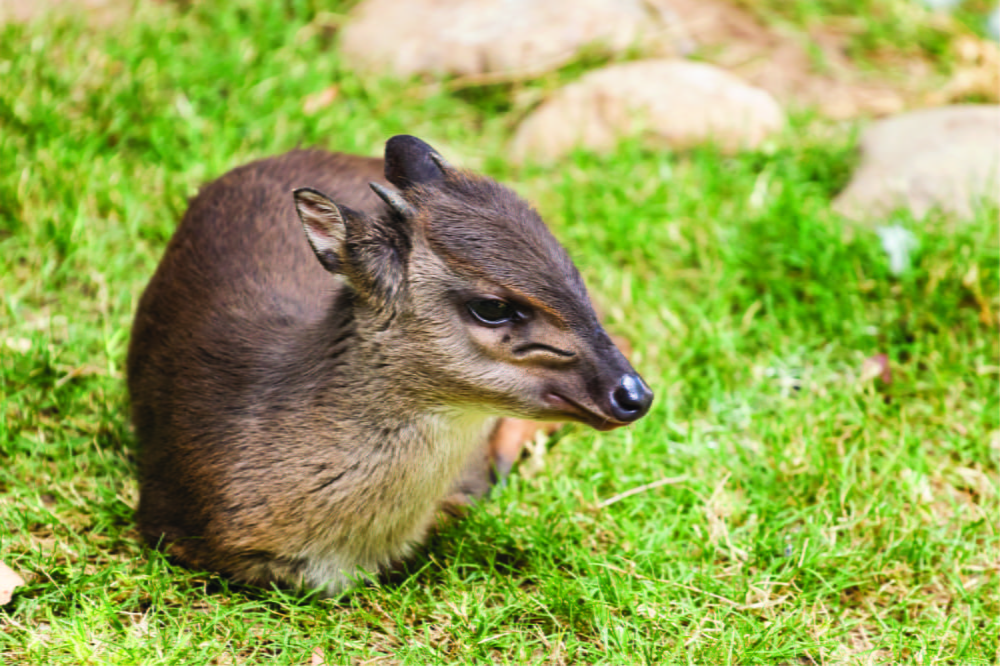
The common name Duiker comes from the Afrikaans word duik, which refers to the practice of the animals to frequently dive into vegetation for cover. And Blue, due to its characteristic blueish colour.
The Blue Duiker is the smallest antelope in South Africa. The females are bigger than the males, weighing up to 4.7 kg and reaching up to 0.4 m in height. Both the males and females have horns that reach a length of up to 5 cm.
Blue Duikers are monogamous and a pair will remain together throughout the year, spending much of the time together during mating season.
The Blue Duiker flicks their to communicate imminent danger. Males are known to emit a whistling or a sneezing sound to raise alarm, while the calves and the mother communicate through a soft growling sound. Another mode of communication is by using scent to mark their territories and to indicate readiness for mating. Females are very aggressive after birth and may attack if you come too close to the newborn.
Unlike the Grey or Common Duiker, the Blue Duiker is a herbivore. They are rarely observed drinking water even if it’s readily available because they get the water they need from the food they consume.
Blue Duikers live up to 12 years of age.
Brown Hyena
Group: Clan
Family: Hyaenidae
The name Hyaena derives from the ancient Greek word hyaina which evolved from hys meaning hog or pig. Under the Roman pen, hyaina became hyaena, and when English emerged as the prominent language, hyaena morphed into hyena. Brunnea comes from the Latin word brunneus which means brown. Brown Hyenas are also known as Strandwolves.
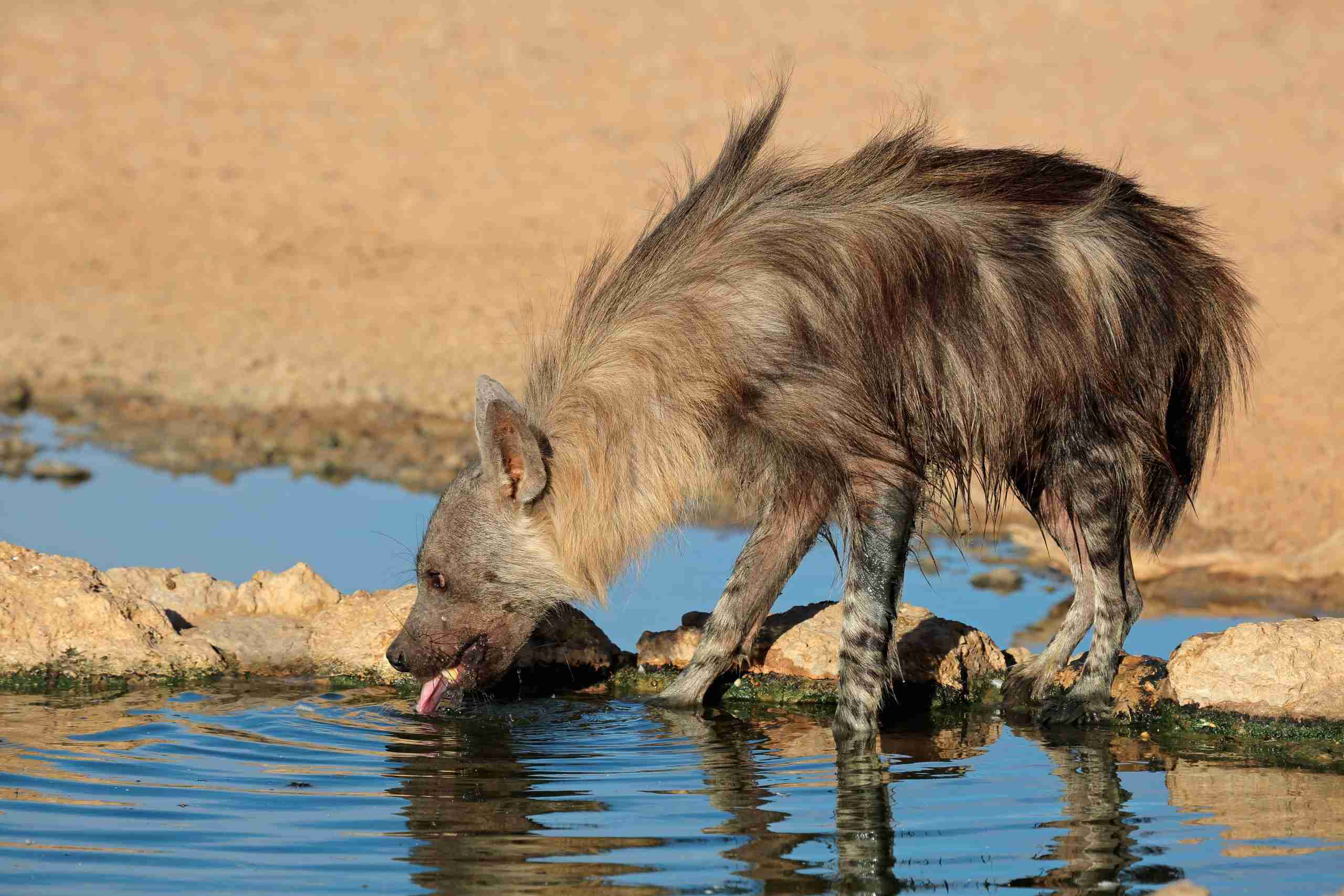
The Brown Hyena has a scruffy look and differs in appearance from the three other hyena species by its pointed ears and long shaggy coat. The long hair on its neck, shoulders, and back are raised when it is agitated.
Brown Hyenas can reach a height of 80 cm and weigh up to 44 kg.
Brown Hyenas are carnivores, and, being scavengers, are highly opportunistic feeders.
Its well known weird howl imitates the sound of a hysterical human laugh. Brown Hyenas are very aggressive animals.
They are nocturnal, hunting at night and sleeping during the day. Adults hunt on their own, following trails they used previously and have scent-marked. Brown Hyenas live in clans of about 5 to 15 individuals, which are related to each other, but alpha males usually come from another clan.
After a gestation period of up to 90 days, 1 - 4 cubs are born. Cubs reach maturity between the age of 2 and 3. Males usually leave the den but females remain with the clan.
There are around only 8000 Brown Hyenas in the wild and they live up to 13 years of age.
Buffalo
Group: Gang
Family: Bovidae
The Buffalo is one of the most dangerous animals of the Big Five due to its aggressive nature and estimates to kill over 200 people every year.
Between 3.5 to 5 years, the female reaches sexual maturity, her gestation period lasts 11.5 months, and she will give birth to a single calf about every 2 years.
There are about 900 000 African Buffalos in the wild. They are extremely sociable animals and roam in gangs of up to 2000 buffalos.
African buffalo have a complex social structure based on what scientists call a dominance hierarchy. Dominance is established by the strength, size and age of a given buffalo combined with their interactions with other members of the gang.
Adult males will often kneel down and rub their necks and heads on the ground in a display of aggression to establish dominance. Buffalos do not have very good eyesight but their hearing and especially their smell is exceptional, they have a symbiotic relationship with many African birds such as the Oxpecker, which could be found eating insects off the buffalo and will also warn the buffalo of approaching danger.
If a buffalo gang comes under threat from a predator they form a circle around their young, facing outwards they lower their heads to form a protective barrier with their horns.
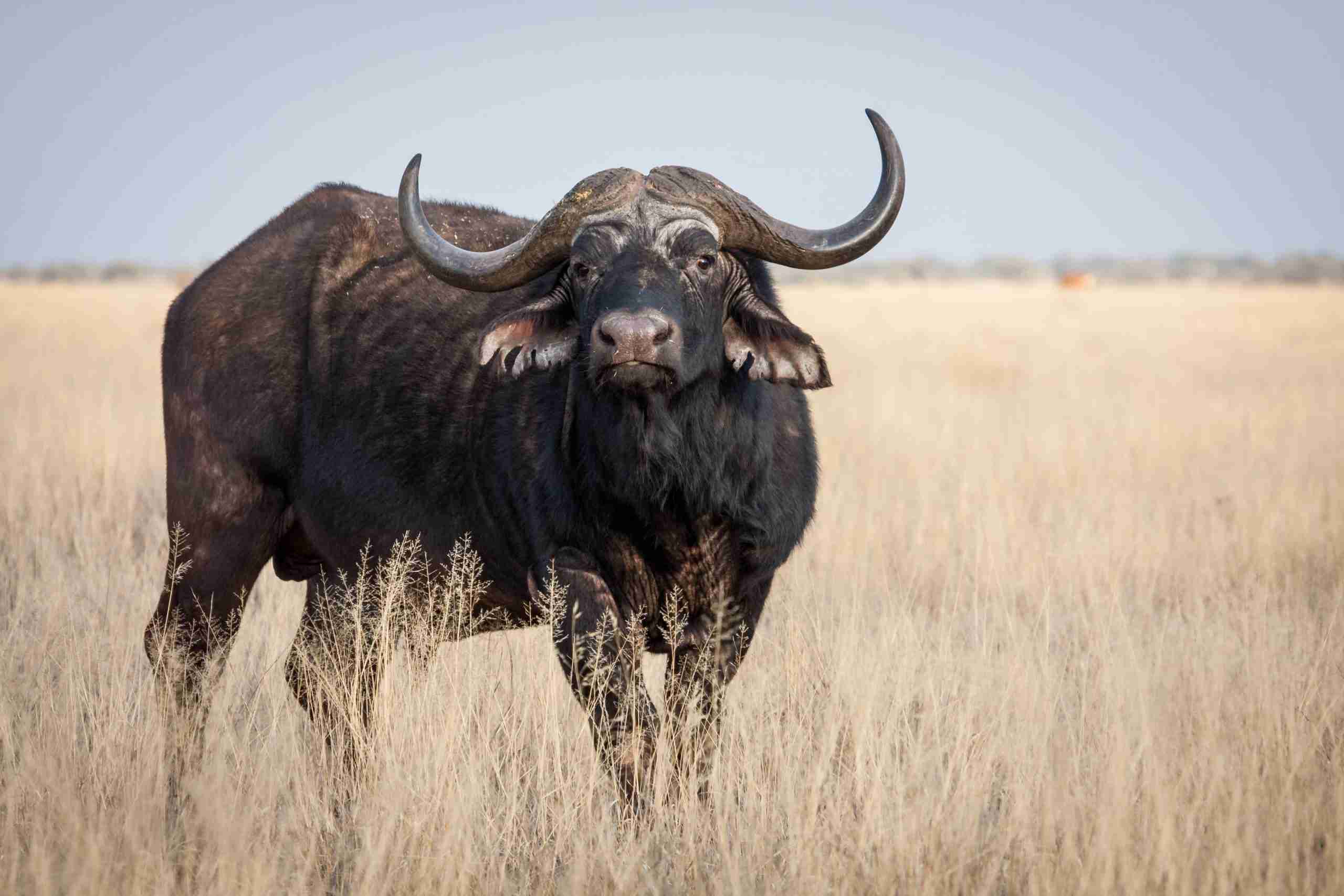
Adult males can weigh up to 830 kg and reach a height of almost 1.5 m and their hook-shaped horns can grow up to 1.6m long. Buffalos can run up to 65 km/h and could live up to 22 years of age.
A Buffalo never forgives! There are many hunting tales that mention wounded buffaloes setting ambushes for hunters that follow or have attacked them in the past (even years before), by circling back on their own tracks, to stand and wait for the hunters that are tracking them. This has earned them the title "Black Death".
Bushbuck
Group: Herd
Family: Bovidae
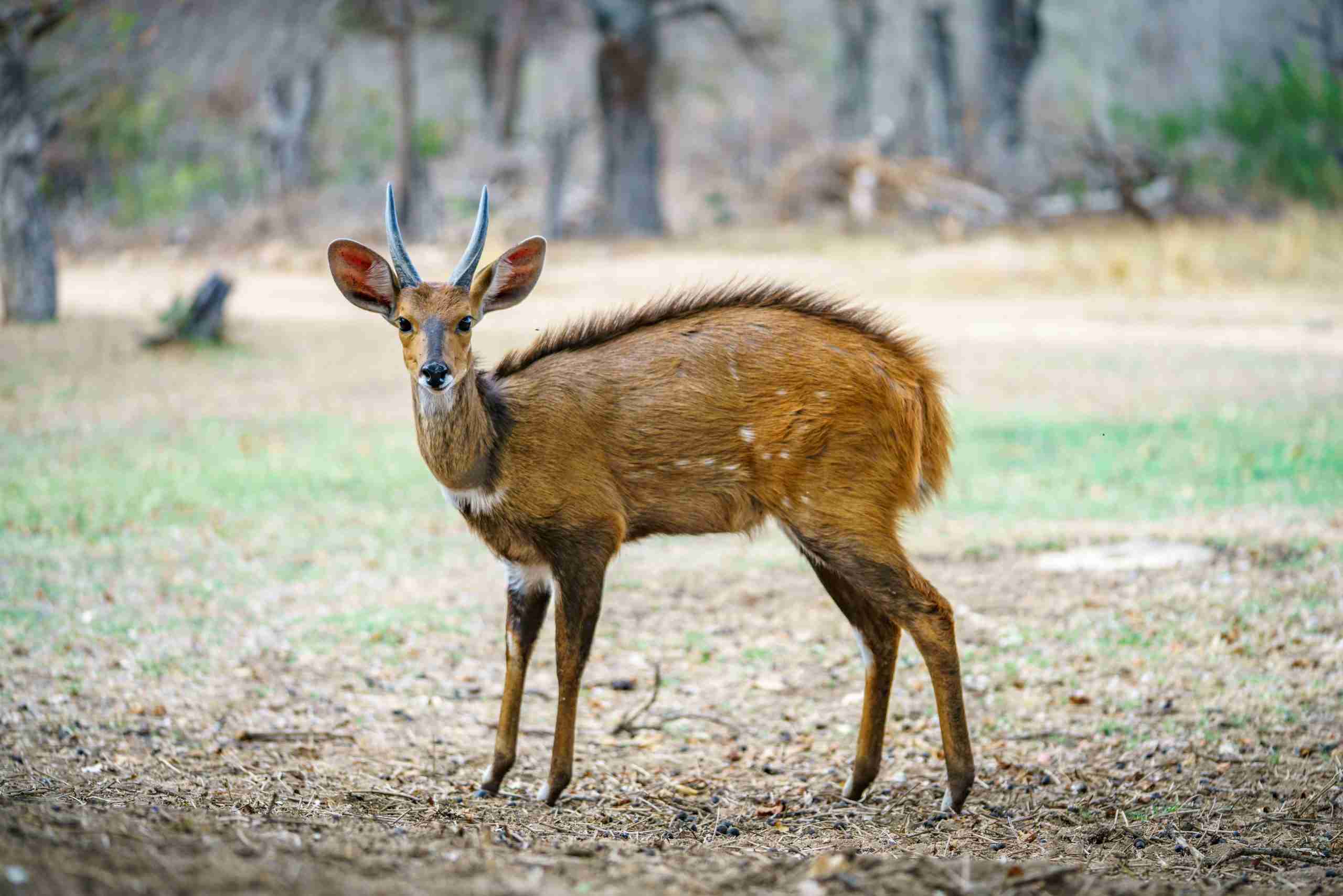
The Bushbuck is a close relative of the Kudu and Nyala antelope.
The Bushbuck is the only non-territorial and solitary African antelope. They are the least social of all the antelopes, and males will make special efforts to stay by themselves.
They are extremely good swimmers, easily crossing rivers as wide as 3 km.
They can reach a height of 1 m and weigh almost 80 kg.
Bushbucks are nocturnal animals and are most active during the early morning or late night.
The Bushbuck’s horns are almost straight with one twist close to the bottom. Horns are distinct male features and can reach up to 57 cm in length.
There are over 1 million Bushbucks living in the wild and they have a short life expectancy of around 12 years old.
Bushbucks need water, but if water is scarce, they can survive on dew or the moisture trapped in plants.
After a gestational period of 7 months, a single calve is born and kept hidden for up to 4 months. The mother will eat her own placenta at birth and any of the calves’ dungballs to remove any possible scent to predators. The short gestational period makes it possible to produce two litters each year.
Bushbucks freeze when in danger, or lay down and pretend to be dead. Unlike other antelopes, Bushbucks do not tolerate birds that remove insects from their fur. Consequently, they are filled with ticks.
Bushpig
Group: Sounder
Family: Suidae
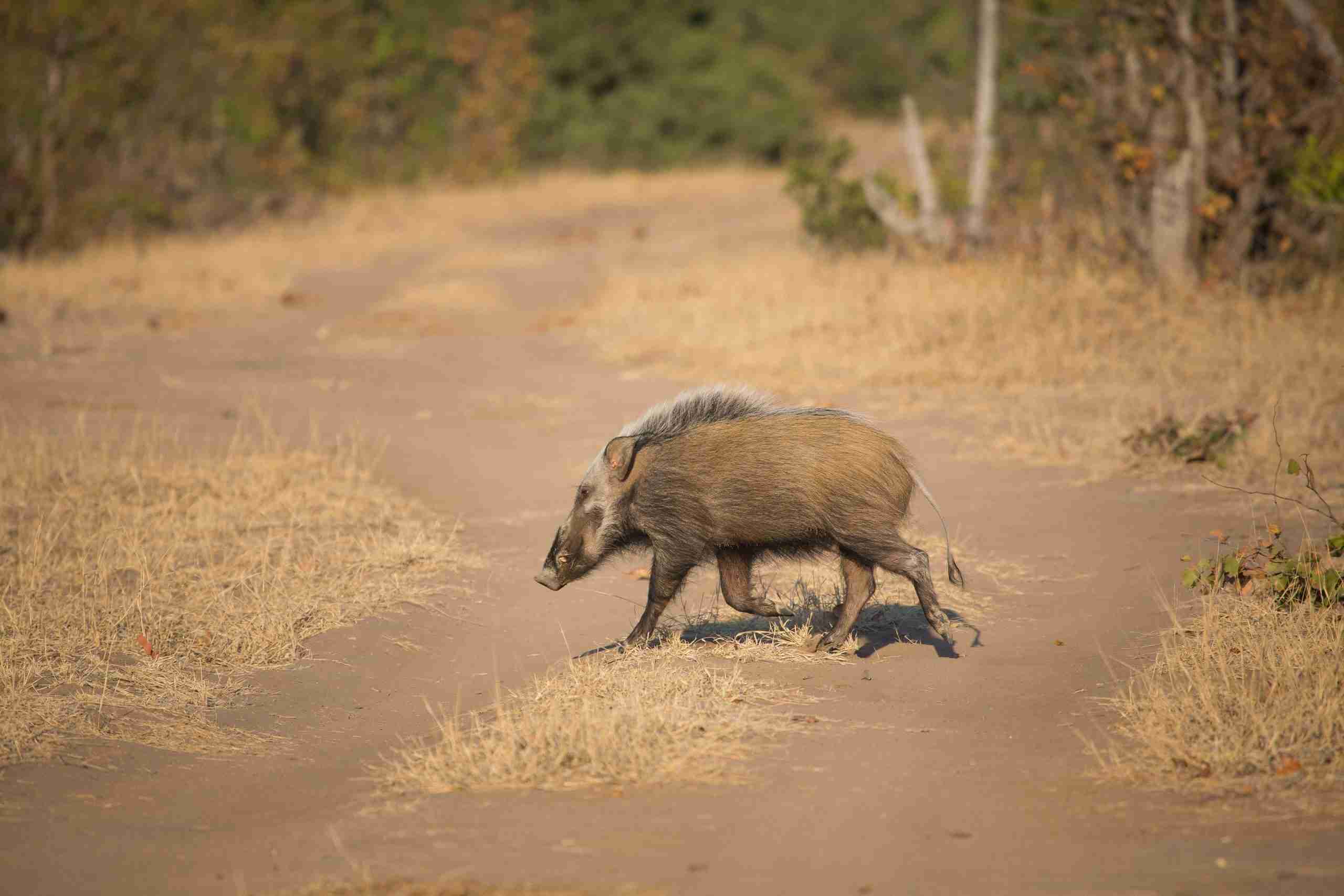
The Bushpig is said to be the African version of the European wild boar as the two mammals share similar physical features and social behaviours.
Bushpigs are a strong, hairy and round pig that is identified by their muscular, blunt snouts, pointed, white-tufted ears, short legs and small eyes. At birth, they have brown and yellow stripes. As they get older, they get darker and the stripes disappear. The lower tusks can grow up to 7 cm in length.
Boars can weigh up to 82 kg and reach up to 115 cm in length.
Bushpigs are omnivores, feeding on plant roots, fruits, insect larvae, tubers, rhizomes and carrion.
Bushpigs are nocturnal and territorial land creatures. They travel less than 5 km a day. They are known to be very social animals and participate in communal living of groups of up to 12 pigs. A sounder is typically made up of a dominant boar and a dominant sow. The rest of the group is made up of solely females and piglets.
One of the Bushpigs’ favourite activities is to wallow in water, rolling around or laying in mud or dust, to prevent overheating and to protect their skins from insect bites.
After a gestation period of 4 months, the sow can give birth to anything between 1 to 8 piglets and these piglets weigh up to 700 g at birth. At the age of only 6 months, they are then pushed out of the group.
Bushpigs live up to 14 years of age.
Cape Hare
Group: Band
Family: Leporids
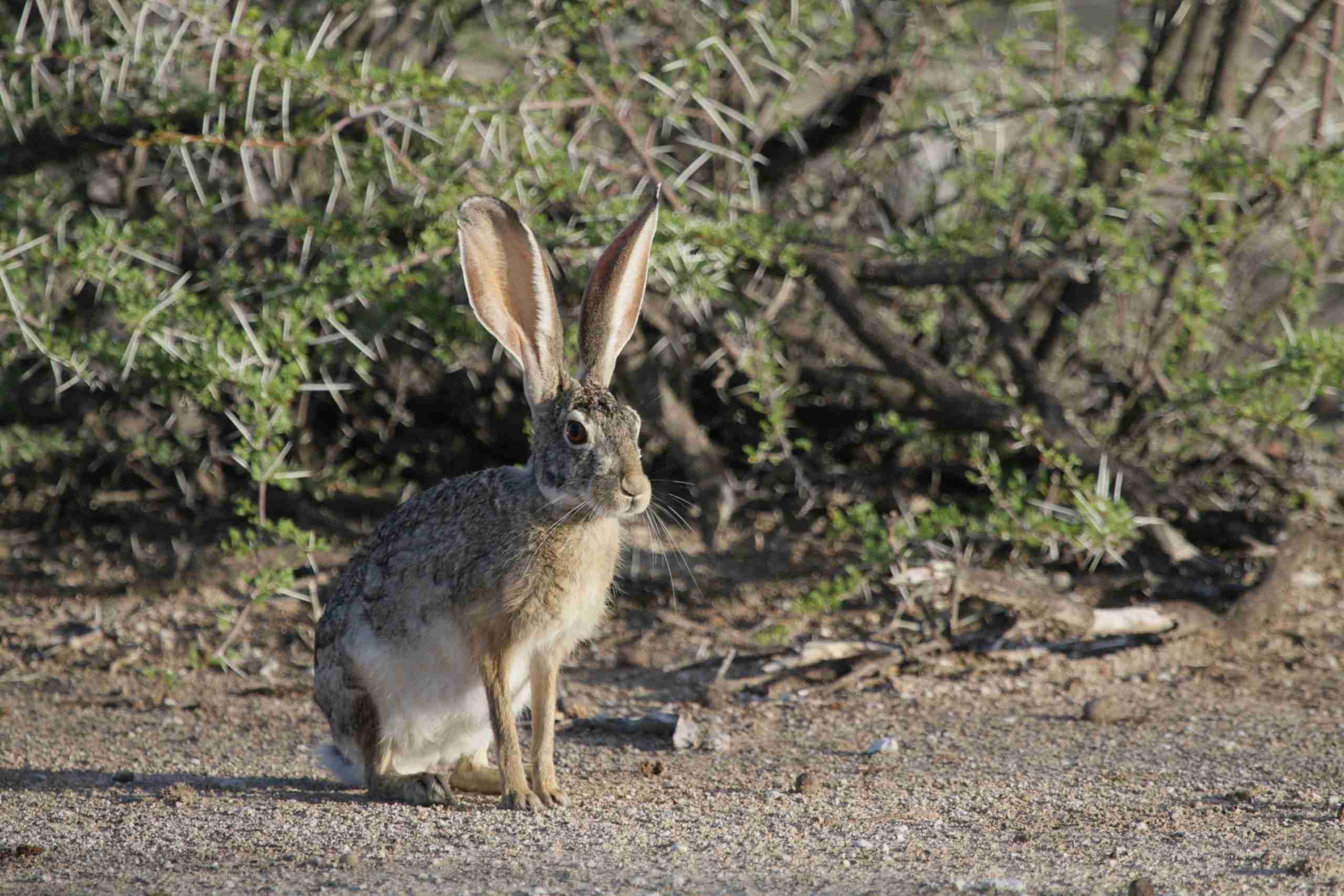
The Cape Hare, commonly known as the Desert Hare, has light brown fur, long and well-developed legs, and large eyes and ears.
The Cape Hare are solitary, nocturnal animals. They are known for being extremely fast, excellent swimmers and outstanding climbers, making them a very difficult animal to catch.
Cape Hares are herbivorous and practice coprophagia — the ingestion of their own feces. Because they have fairly simple digestive tracts, a large percentage of their droppings are not fully digested and still contain essential nutrients. Hares will often feed on their droppings to obtain these leftover nutrients.
Hares are prolific breeders, and females can give birth to up to 8 litters of 2 offspring each per year.
In the wild, Cape Hares rarely live beyond one year, and very few live for up to 5 years. Cape Hares are robust and healthy animals, though, and this low lifespan is largely due to predation.
Caracal
Group: Clutter
Family: Felidae
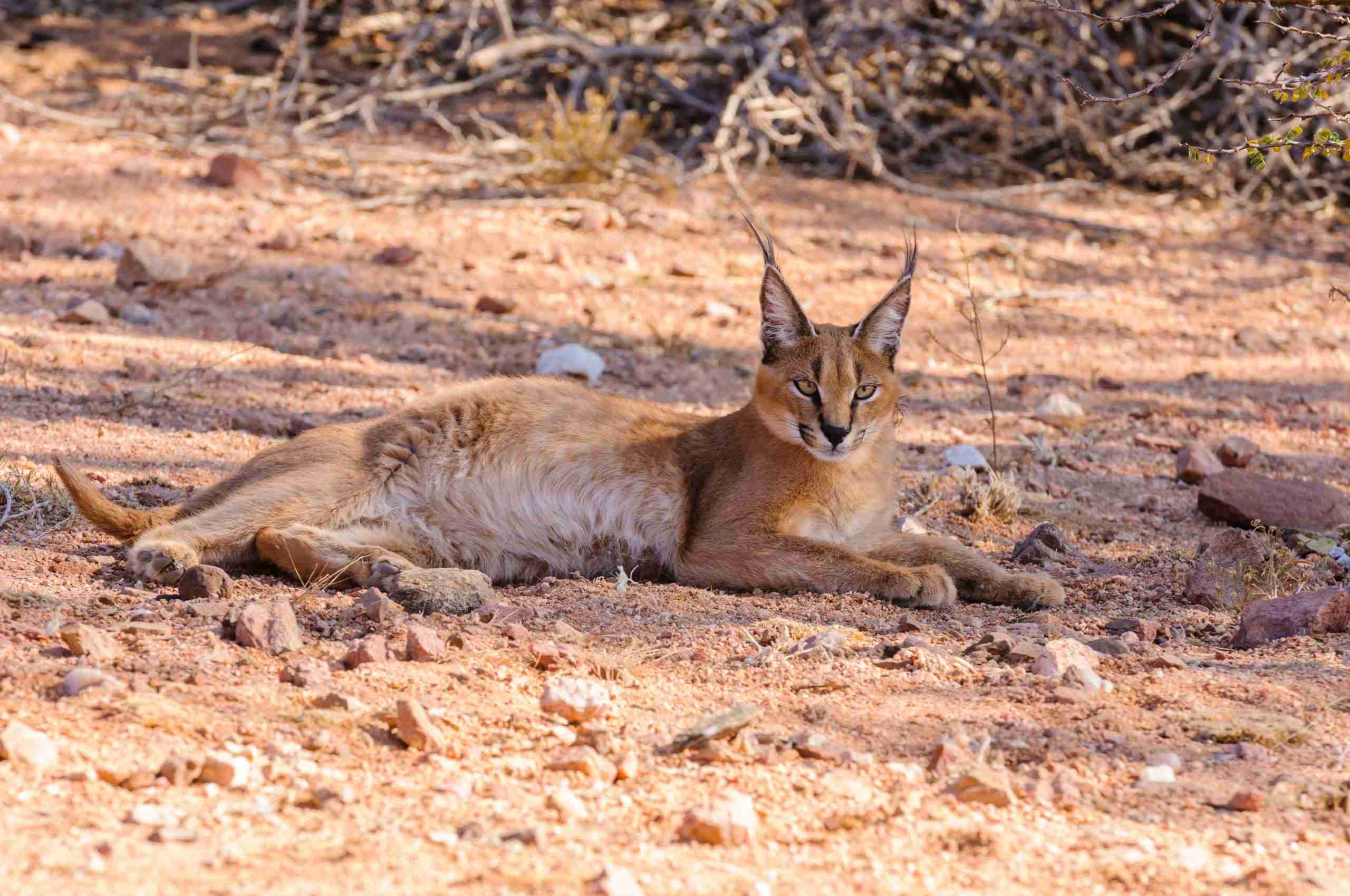
The name Caracal is derived from the Turkish word Karrah-kulak which means cat with black ears.
The Caracal is often referred to as the African lynx or desert lynx.
They are small catlike animals that reach up to 0.5 m in height and weigh up to 20 kg.
The most distinctive caracal characteristics are the long tufts of black hair on the tips of the ears.
Caracals are nocturnal, which means they sleep during the day and hunt at night. They are solitary animals and seldom hunt with a mate. They are aggressive cats and are quick to defend their territory from other animals.
Caracals have a vertical leap of up to 3 m. Their cunning nature and agility make them highly proficient hunters. They are powerful animals with a strong prey drive and the desire to roam which can make them destructive and frustrated in the wrong environment.
They can run up to 80 km/h and have 20 muscles in each of their ears helping them to catch prey. A Caracal’s tail helps it to turn and stay on course whilst hunting.
Females give birth to a litter of 3-4 kittens. Caracal kittens are born with their eyes closed and their ears curled up.
Caracals are occasionally kept as pets, but they have never been domesticated and owning one requires a lot of dedication and preparation.
Eland
Group: Herd
Family: Bovidae
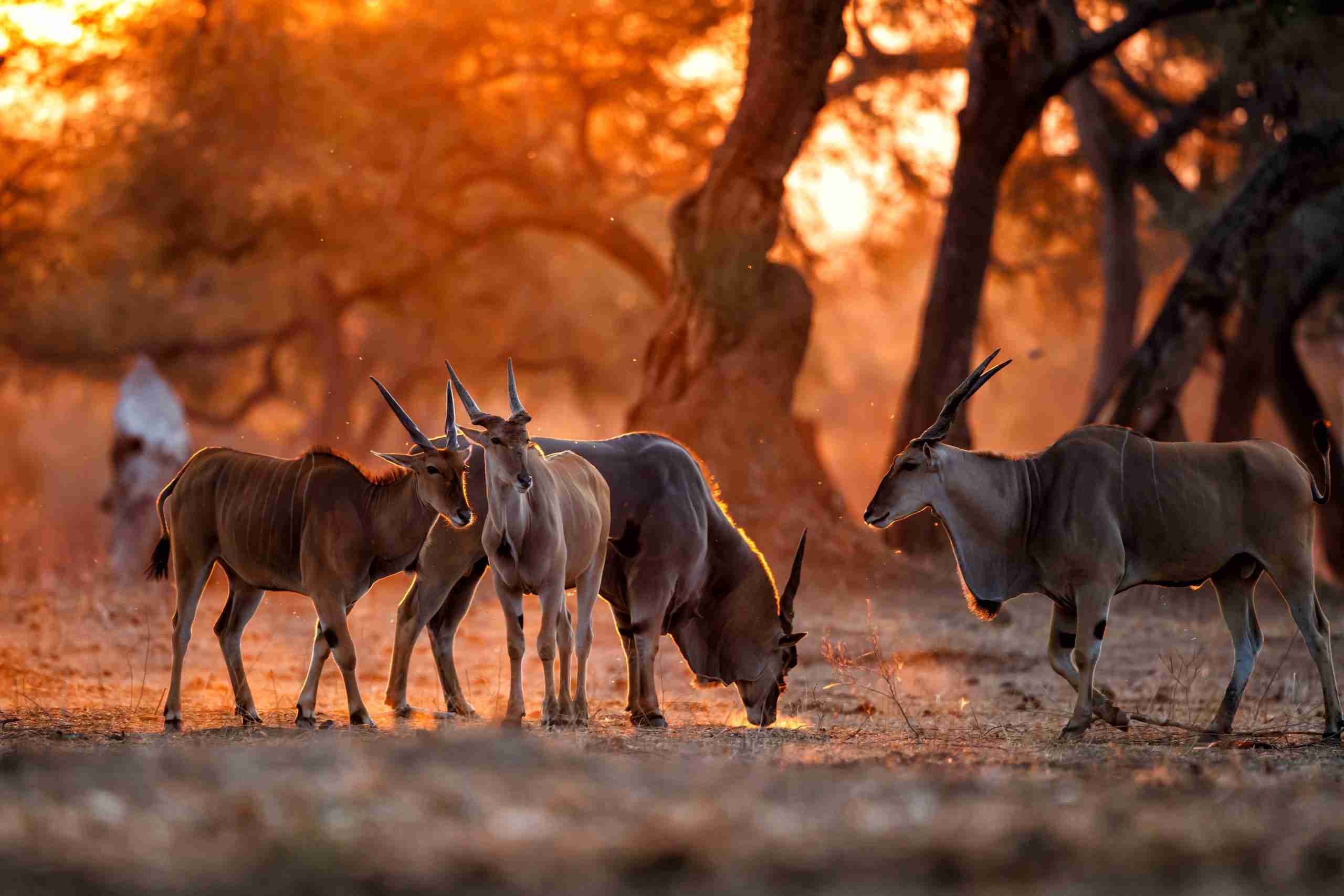
The name 'eland' is Dutch for elk or moose.
These spiral-horned antelopes can weigh up to 1000 kg and reach 1.8m tall. The adult males’ horns are shorter than the females’ and reach a total length of up to 66 cm.
Bulls use their horns to battle for dominance while the cows use theirs to protect their young from predators.
Elands are the largest of the Bovidae family but the slowest antelope, with a peak speed of 40 km/h but can jump up to 2.5 m from a standing start when startled. However, the Eland can maintain a trot of 22 km/h indefinitely.
Usually fawn or tawny-coloured, they turn grey or bluish-grey as they get older; the oldest Eland becomes almost black.
When walking, the eland’s hooves produce a sharp clicking sound. The sound carries some distance and is a good indication of an approaching herd. Some scientists believe it may be a form of communication from a dominant male indicating to another male where his territory is.
They are very social animals, often found in herds of 25-60, occasionally gathering in groups of more than 1,000, especially during the rainy season.
These antelope are considered docile and easily tamed. African farmers are attempting to domesticate them for meat and milk production. Eland milk has almost three times the fat and double the protein of milk from dairy cows and an Eland cow can produce up to 7kg of milk per day.
Elands are only found on the African continent. There are about 136 000 Elands living in the wild and they can live up to 25 years of age.
Genet
Group:
Family: Viverrids
Scientists believe the name came from the Greek word gen meaning bear, added to the New Latin etta meaning small.
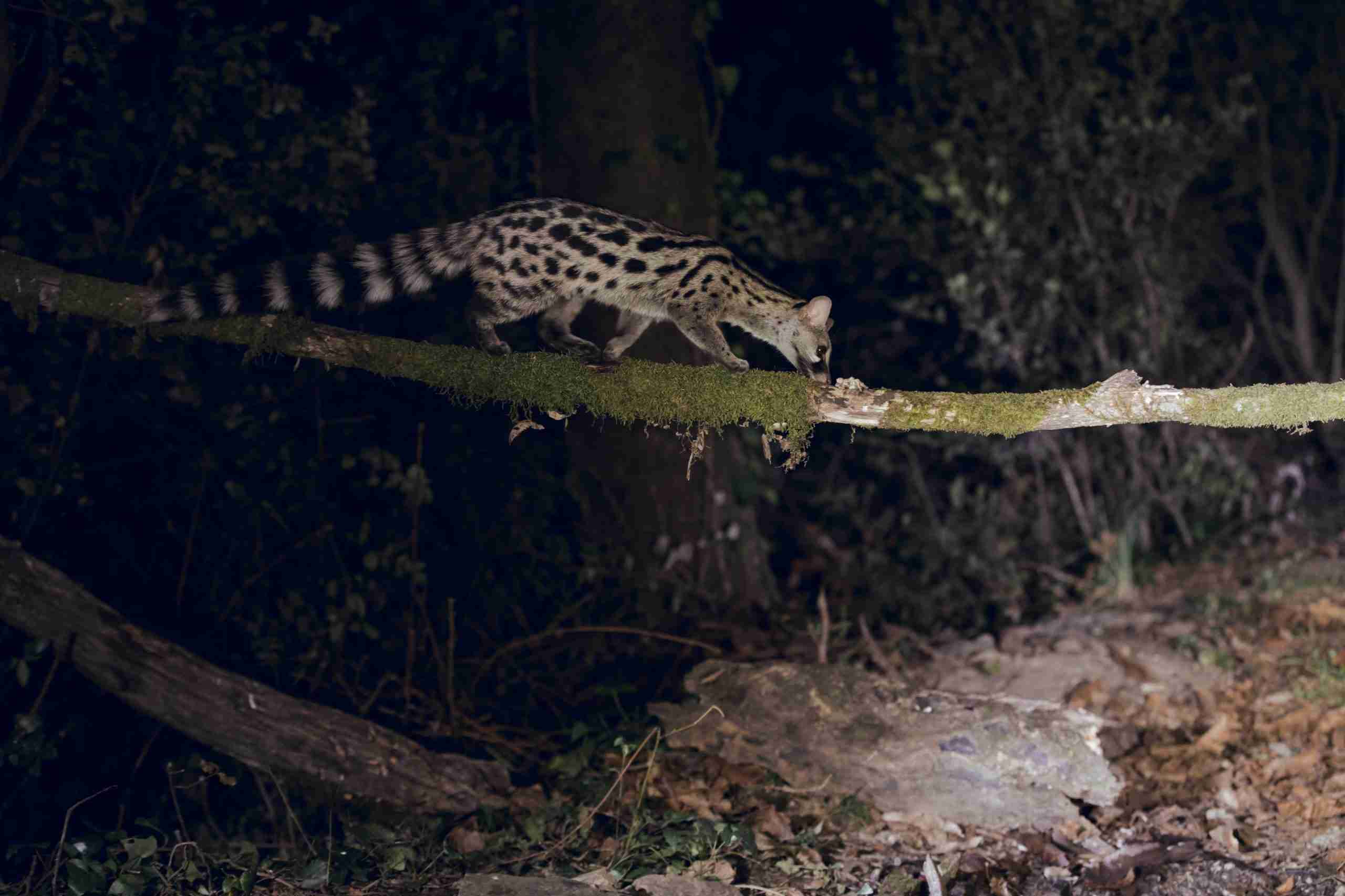
Genets are long, lean carnivores that appear catlike with a tail usually as long as (if not longer than) the body. They weigh up to 4 kg and reach a length of 60 cm.
They have black spots on their backs in parallel lines and spots on their face as well which appears like a mask, their long tail has prominent black rings. Genets have small heads with large eyes and wide ears.
These carnivorous animals attack small mammals, birds, as well as, small reptiles with their sharp retractable claws. Their diet consists of mice, rodents lizards, frogs, as well as, birds, and fish.
Female Genets give birth to 1 to 5 babies in the cracks of rocks or tree holes after 10-11 weeks of gestation. The babies are born blind and their eyes only open after the first 10 days of life. They must rely on their mothers' milk for the first four months and begin receiving meat along with the milk during the seventh week. They can independently hunt after 5 months.
Hiccup-like noises are common Genet sounds that are exchanged between a mother and a baby, or between partners during mating season. Juvenile genets utter meow cries, whilst terrified genets growl.
Genets are extremely territorial. Males mark their home ranges with urine, while the females mark them with their scent.
Genet lives up to 8 years of age in the wild.
Giraffe
Group: Tower
Family: Giraffids
The name Giraffe is derived from the Arabic word Zarafah, meaning one who walks swiftly.
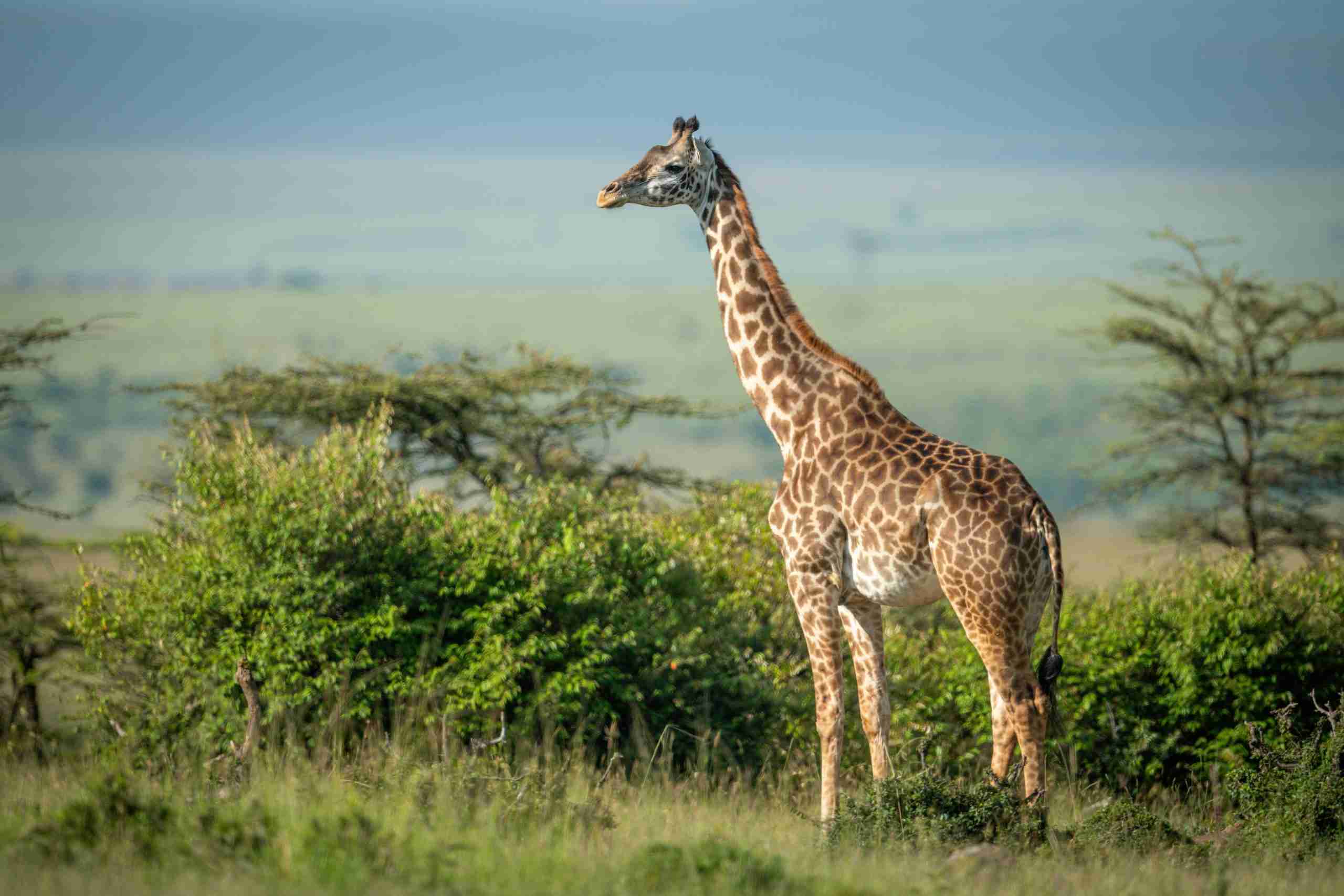
Giraffes are the tallest mammals on Earth and an adult male can reach up to 5.5 m in height.
Both male and female giraffes have two distinct, hair-covered horns called ossicones. They also have extremely long tongues that can reach up to 53 cm in length.
They can run up to 53 km/h for short distances.
A giraffe's neck is too short to reach the ground. As a result, it has to awkwardly spread its front legs or kneel to reach the ground for a drink of water. They only need to drink water every few days as they gather enough moisture from the plants they eat.
Giraffes sleep and give birth whilst standing. They only need 5 to 30 minutes of sleep in a 24-hour period! They often achieve that in quick naps that may last only a minute or two at a time. Newborns are welcomed to the world with a 1.5m drop to the ground.
A giraffe’s spots are much like human fingerprints. No two individual giraffes have exactly the same pattern.
Giraffes spend most of their time eating and can guzzle up to 45kg of leaves and twigs a day.
They are very social animals and roam around in groups of up to 15 members led by an adult bull. The other members are cows and young calves.
To determine the stronger bull, males fight by butting their long necks and heads, known as necking.
Giraffes live up to 25 years of age in the wild.
Grey Duiker
Group: Herd
Family: Bovidae
The common name Duiker comes from the Afrikaans word duik, which refers to the practice of the animals to frequently dive into vegetation for cover. And Grey, due to its characteristic greyish colour.
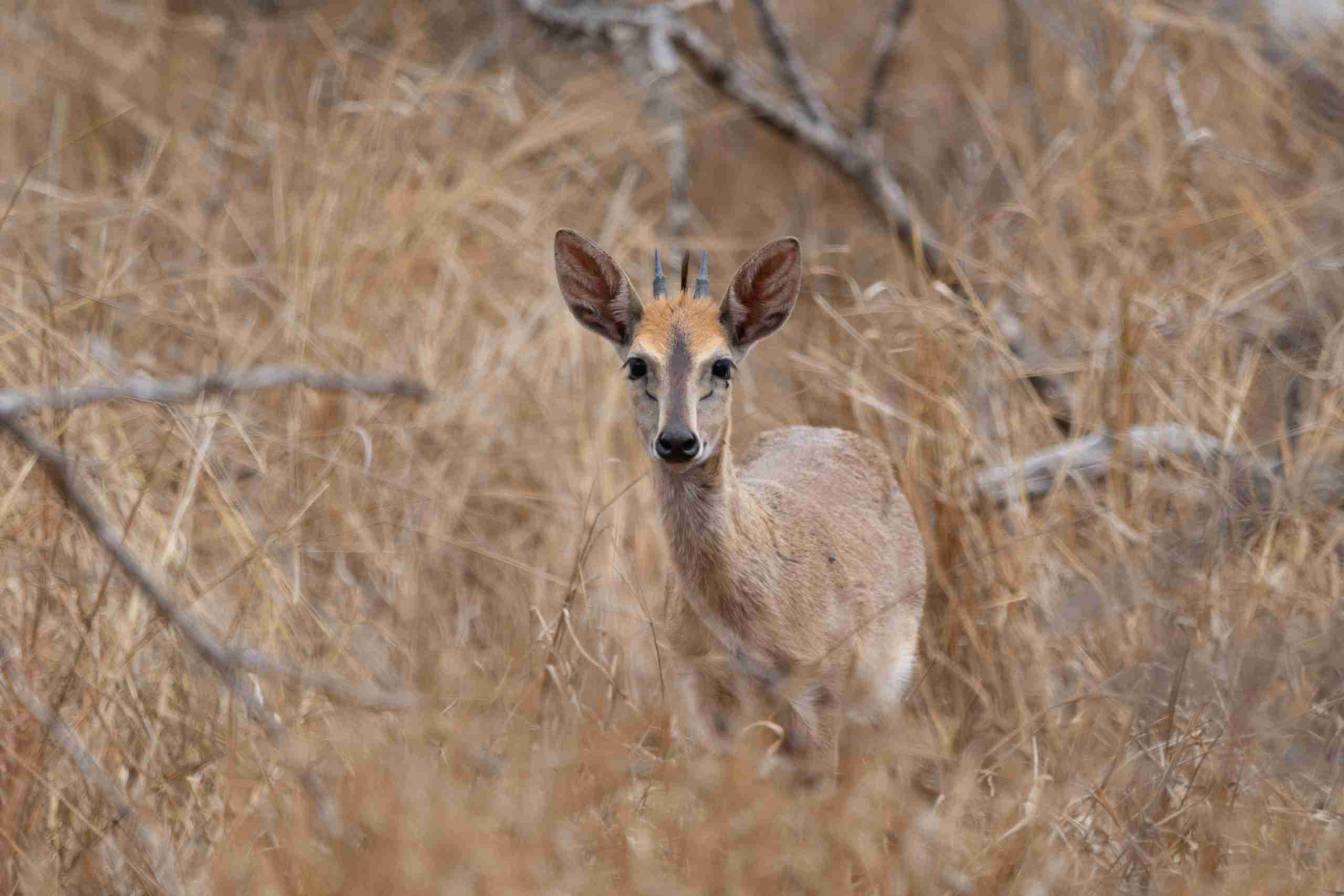
The Grey Duiker is a tiny, shy antelope with only the males having short horns. The females are bigger than the males, weighing up to 22 kg and reaching up to 0.7 m in height. The males’ horns reach a length of up to 10cm.
The Grey Duiker spend their time in solitary and only come together to mate. They form monogamous breeding pairs.
They are omnivores, they typically eat leaves, and fruits and flowers that feeding birds have dropped to the ground. The Grey Duiker may also eat insects and even lizards, frogs, rodents and birds. Occasionally they may eat carrion.
They are mainly active in the late afternoon and into the night with other peak periods in the early morning hours. The males and females are territorial chasing away others only of the same sex.
The number of Grey Duiker living in the wild is unknown, however, scientists believe there could be up to 10 million currently in Africa. They live up to 11 years of age, birthing up to 10 calves in their lifetime.
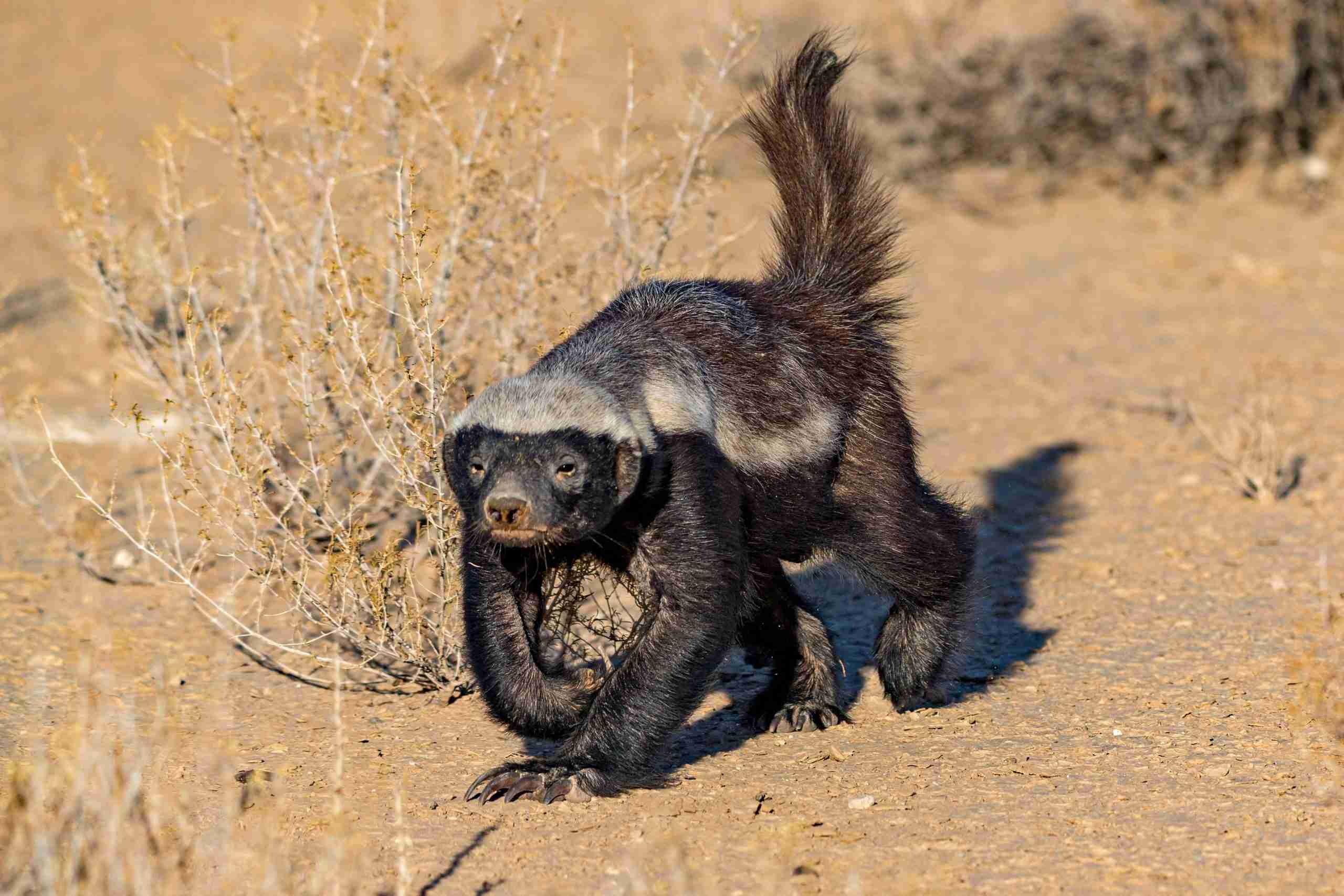
Honey Badger
Group: Clan
Family: Mustelidae
These voracious omnivores get their name from their fondness for feeding on honey and honeybee larvae. A Honey Badger is also known as a ratel, the Afrikaans word derived from the Dutch word raat meaning rattle which could relate to one of the noises the honey badger makes.
Honey badgers are from the same family as weasels. They are solitary animals and only come together to mate. Honey badgers typically have one, which is raised solely by the female, who takes care of it until it's a year or two old.
This tough little critter has a stocky, flattened body with short, strong legs, along with long claws on the front feet for digging and defense. The honey badger's hair is thick and coarse, mostly black, with a wide gray-white stripe that stretches across its back from the top of the head to the tip of the tail.
The Honey Badger boasts a gland at the base of its tail containing a stinky liquid. Generally, it’s used to mark territory and scare bees away from hives, but should the animal find itself in distress, its biological knee-jerk is to release a stink bomb.
Honey badgers are tough and have gotten an aggressive reputation. When confronted, they don't hold back: they face their enemy, produce a rattle-roar, stands its hair on end, emit a stink bomb, and then charge. They have been known to survive snake venom and stings of bees due to their thick skin.
They are omnivores who will feast on mammals, birds, reptiles, insects, larvae, plants, fruit, eggs, and roots—and they love honey as well as the honeybee larvae in it.
They can weigh up to 14 kg and reach a total length of 97 cm. They can live up to 7 years in the wild.
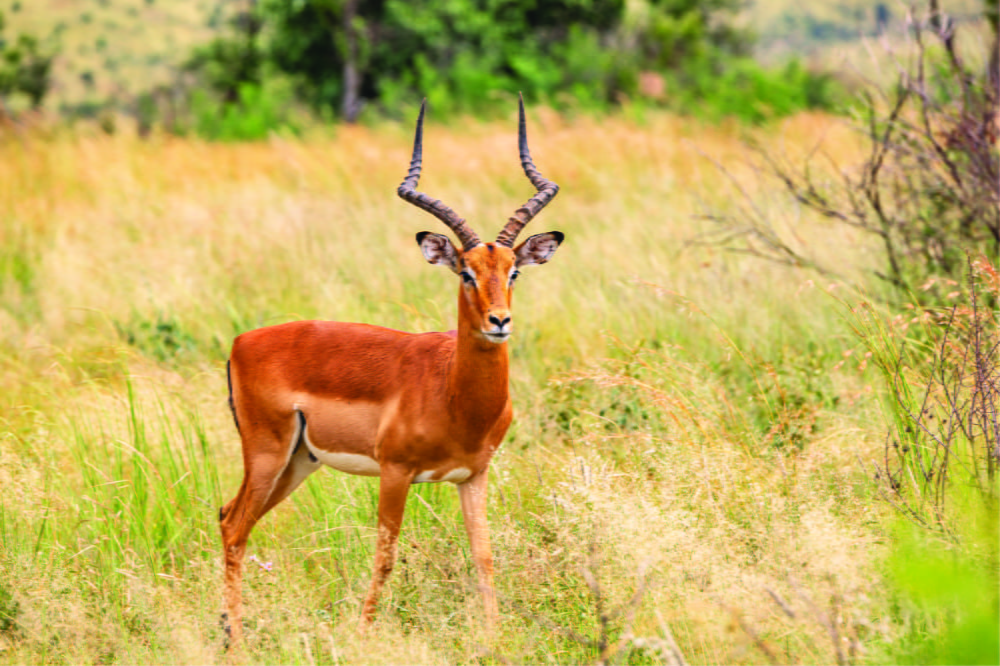
Impala
Group: Herd
Family: Bovidae
The name Impala is derived from the Tswana word phala meaning ‘red antelope’, translated to Afrikaans as rooibok and used often in English as red buck.
Impalas are one of the most common and graceful of all the African antelopes. A slender, agile creature, it can clear formidable obstacles and run at speeds faster than 60 km/h. They are fleet runners who can leap up to 10m in length and 3m in height.
Male Impalas have Lyre-shaped and ringed horns, that can reach up to 75 cm in length. The males produce a scent from a gland on their foreheads to show their dominance. When he loses his rank, a male produces less scent.
Mothers can delay giving birth for a month if the weather conditions are harsh and mostly only give birth during midday when most predators are resting. The sex ratio among Impala is weighed in favour of the female, with twice as many females born each year. Half of all newborn Impalas are killed by predators within the first few weeks of life.
Females and young Impalas form herds of up to 100 antelope, while males live in a bachelor group of about 60 rams.
Impalas are constantly on high alert to danger and have extremely acute senses of hearing, sight and smell. They release a scent from the glands on their heels, by performing a high kick of their hind legs, which helps them stay together when under attack. However, Impalas are naturally anxious and tend to sound false alarms.
Impala can weigh up to 75 kg, grow to 99cm in height and can live up to 13 years of age in the wild.
There are over 2 million Impalas across the African continent.
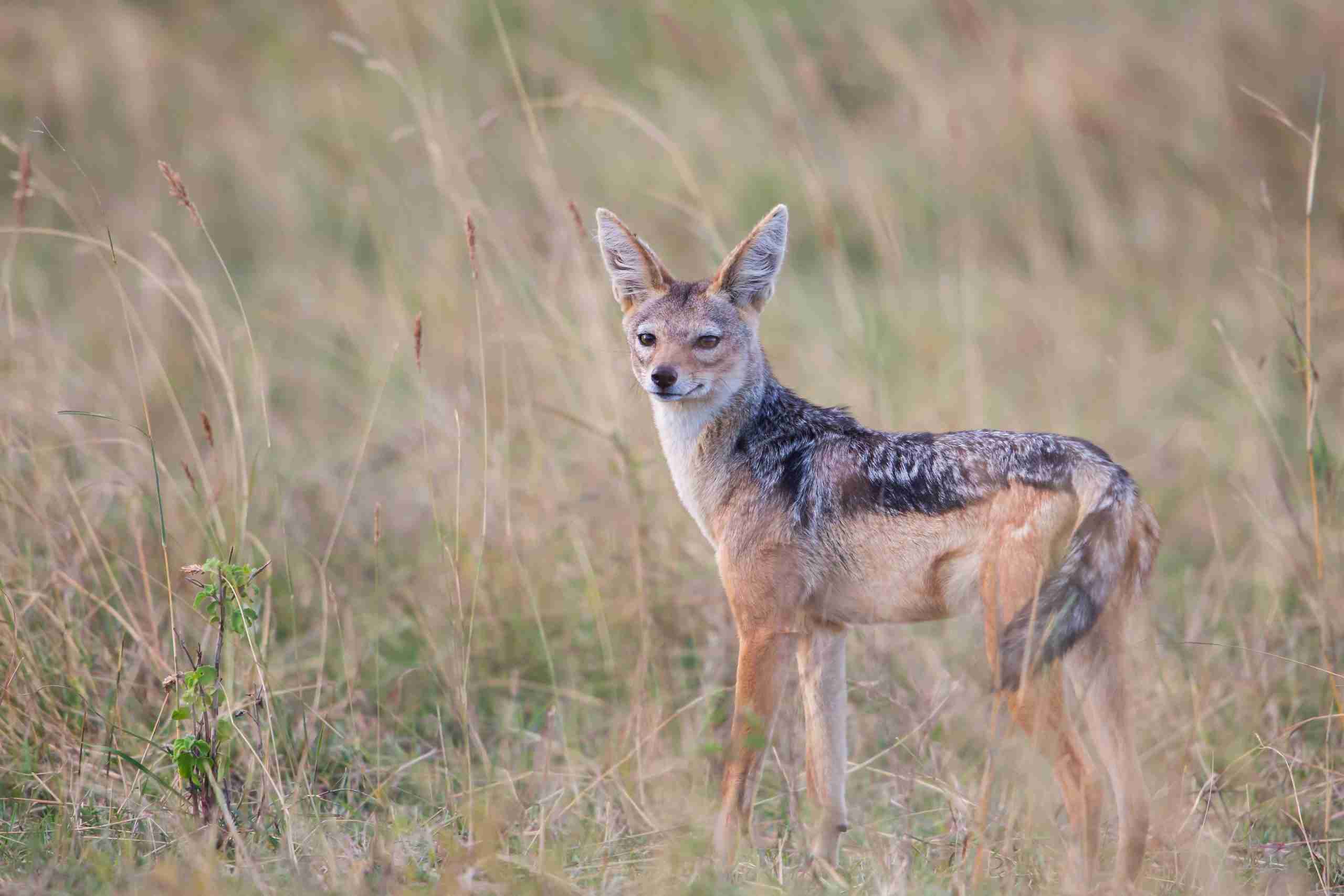
Jackal
Group: Pack
Family: Canidae
The name Jackal is derived from the French word chacal and the Turkish word çakal, which derived from the Sanskrit word śrgãla, which means the howler.
Jackals reach up to 40 cm in height and weigh up to 12 kg.
There are three species of Jackal: the black-backed jackal; the golden, or common, jackal; and the side-striped jackal.
As opportunistic omnivores, Jackals like to eat both meat and vegetation. Their diet consists of leftovers from other animals' kills, ground-dwelling birds, reptiles, antelopes, fruits, insects, berries and grass.
Jackals are monogamous and have one mate for life. Both parents help take care of the pups. After a gestation period of up to 70 days, the female will give birth to 2 to 4 pups in an underground den. The pups are born with their eyes shut and it takes them around 10 days to open. To protect her pups, a mother Jackal changes her den every two weeks.
Each jackal family has their own yipping sound that only members of their own family respond to.
Jackals can live up to 12 years of age in the wild.
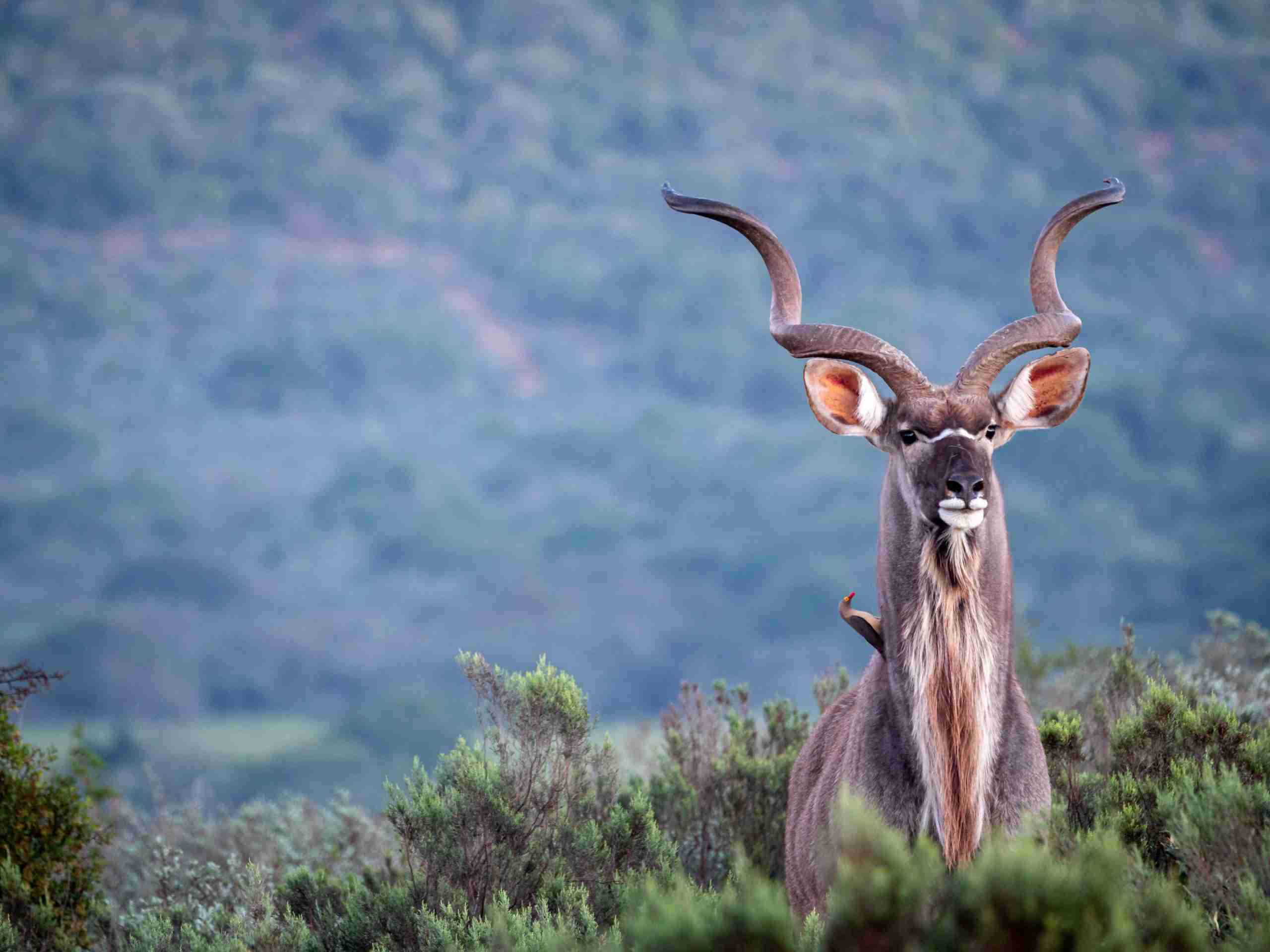
Kudu
Group: Herd
Family: Bovidae
The common name Kudu is derived from the indigenous Khoikhoi language of Southern Africa. In Setswana, a kudu is a totem of wisdom. Its large horns symbolize the wisdom of spirits in the air.
Kudu bulls have long black twisted horns, whilst the cows do not have horns. The horns of a mature bull kudu have two and a half twists, and, if straightened, would reach an average length of 120cm. The horns do not begin to grow until the bull reaches 6–12 months, twisting once at around two years of age and not reaching the full two-and-a-half twists until the age of six. Adult bulls can reach up to 1.5m in height and weigh almost 350 kg.
Kudus have between four and 12 white stripes over their neck and body.
There is an estimate of 482 000 kudus in the wild and they can live up to 15 years of age.
Kudus produce one of the loudest sounds made by antelope in the form of a gruff bark. Due to their large, radar-like ears, Kudus are highly alert and notoriously hard to approach.
Male kudus are rarely physically aggressive but may spar during the courtship season, shoving one another with their horns. Occasionally, during these contests their horns become interlocked and, if unable to free themselves, both males may die.
Kudus are solitary creatures and prefer to live alone and not in herds. While females may form a small group of two to three, these groups are temporary. Males and females only spend time together during the mating season. Usually, a single calf is born in summer from November to January after a gestation period of 7 months. After birth, the cows hide their young for a few days, until strong enough to run with the herd.
Spring hare
Group: Band
Family: Pedetidae
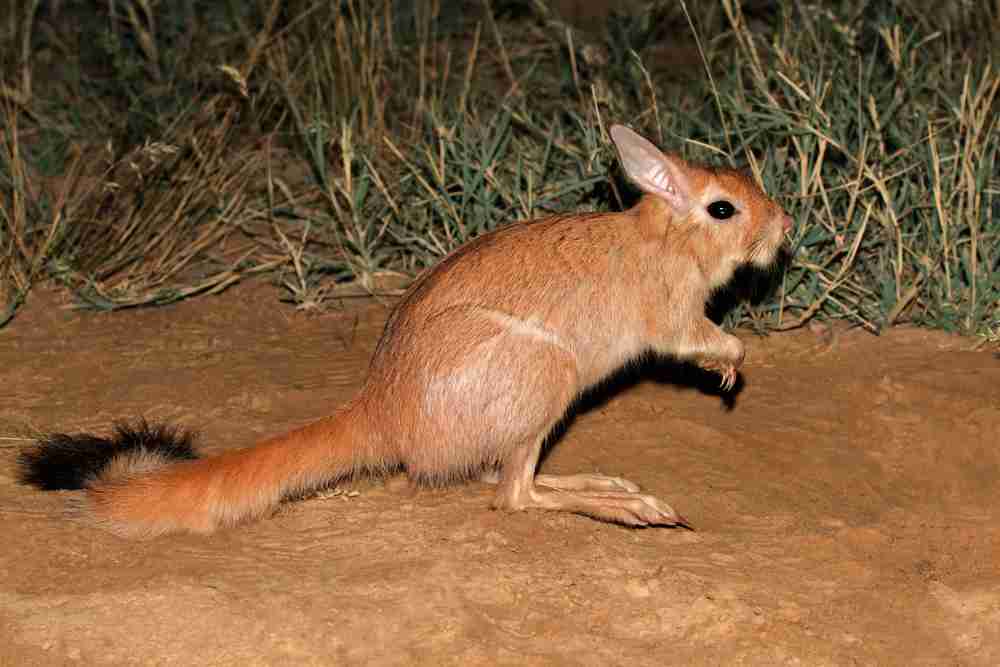
This unusual rodent species have been allotted their own family, after being grouped with porcupine, squirrels and even kangaroos. They are also known as mini-kangaroos.
They share some physical characteristics with a rabbit, but are actually not hares despite their name
Their large back legs enable them to make gigantic leaps, using their long tail for balance. Their much smaller forelimbs have very sharp claws, which they use to dig. The springhare also possesses a flap of skin at the base of the ear that can be completely closed to prevent sand from getting into the inner ear.
They can weigh up to 4 kg and reach a total height of 45 cm.
They can jump up to 9 m in length.
They prefer a diet with food items which are rich in protein and water.
Springhares usually live in burrows, the entrance of which they plug up with sand once inside. Each burrow is inhabited by only one animal, a female with her young or, at most, a pair with their young. They do not roam more than 25 to 250 m from their burrows.
Vervet Monkey
Group: Troops
Family: Cercopithecidae
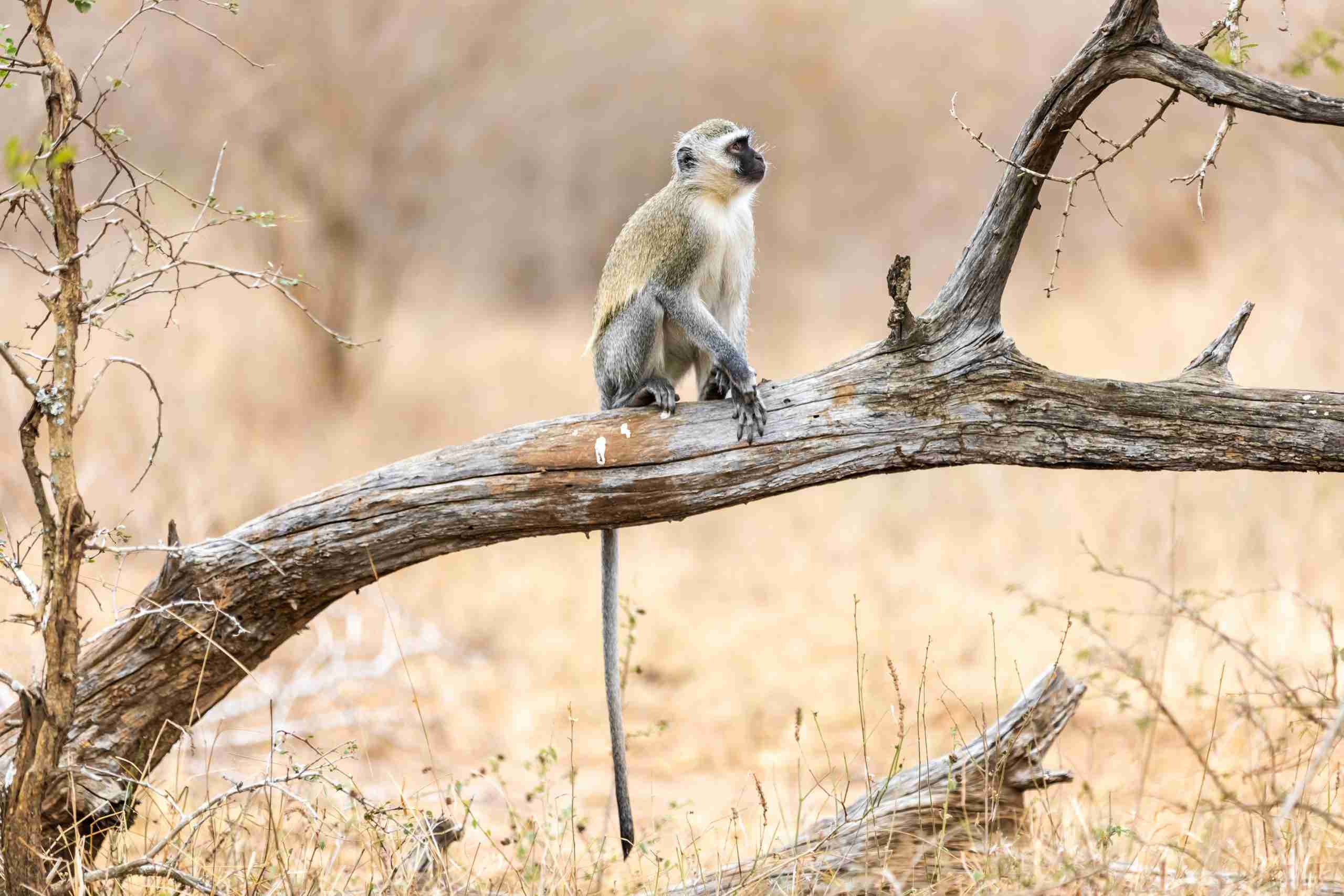
The Vervet Monkey is a small, black-faced monkey with a silvery-grey body. The males are easily recognized by a turquoise-blue scrotum and red penis. The genitals pales whenever the male monkey falls in social rank.
Newborns have black hair with a pink face. They spend the first week of life clinging to their mother's stomach. After about the third week, they begin to move about by themselves and attempt to play with other young monkeys. Infants are of great interest to the other monkeys in the troop; subadult females do everything possible to be allowed to groom or hold a new infant. Researchers report that usually a female's close family members will have the most unrestricted access to the babies. As the infants grow, they play not only with monkeys but also with other young animals.
The Vervet’s society is built on complex but stable social groups of up to 50 individuals in a troop — mainly adult females and their offspring. There is a strict social hierarchy among troop members. Males transfer troops at least once in their lifetime, beginning at puberty. This is a dangerous process, not only because of the predators they may encounter in transit but also because troops dislike immigrants. The hierarchical system controls feeding, mating, fighting, friendships, survival, and even grooming — an important part of the vervet’s life. They spend several hours each day removing parasites, dirt, and other materials from one another’s fur. In the hierarchy, dominant individuals receive the most grooming.
Vervets weigh up to 5 kg and reach a length of 0.6 m with a tail of up to 0.5 m in length. They can live up to 24 years of age in the wild.
Warthog
Group: Sounder
Family: Suidae
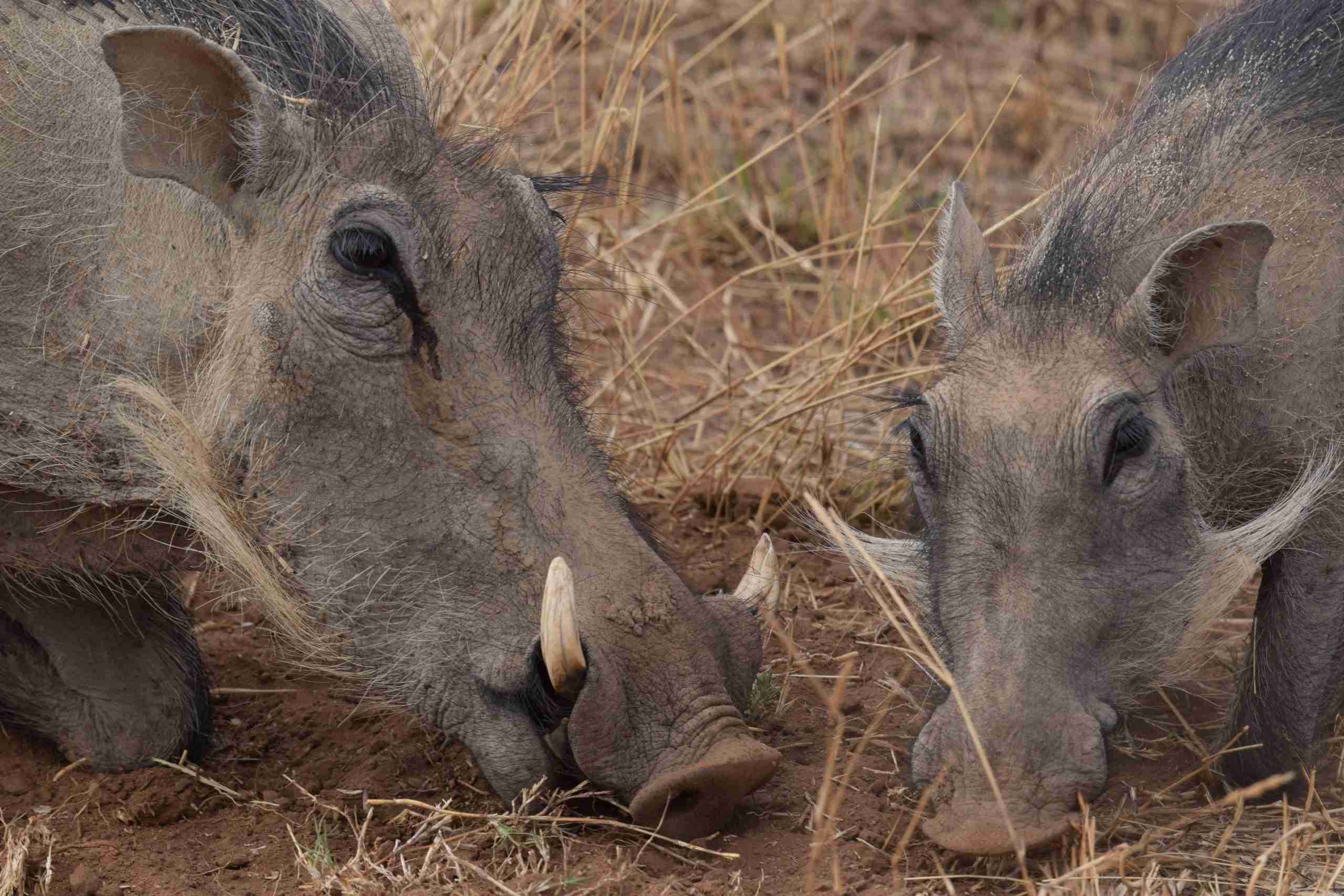
Warthogs get their English name from the large wart-like bumps on their faces that protect their face when they fight, which are also a way of telling male from female. Males have two prominent pairs of bumps - a large one beneath each eye and one on each cheek, while females have only a much smaller pair beneath the eyes.
Contrary to Pumba, the warthog eating worms in The Lion King – Warthogs are herbivores, eating grass, barks, berries and plants.
Warthogs sleep underground at night in burrows that they steal from other animals, they don’t dig their own. Sow let their piglets go into their burrows first, then they back into the burrow so that if anything comes into the burrow as a threat she can run out and protect them.
Warthogs like to wallow in water, rolling around or laying in mud or dust, to prevent overheating and to protect their skins from insect bites. They have padding on their knees in order for them to kneel down to eat lower grass.
2 or 3 sows form small sounders with their young. They groom each other and huddle together at night for warmth. Boars aren't as social and can be territorial. Often, they live alone.
Warthogs can run up to 48 km/h. They zoom right to their dens and enter rear first, with their tusks sticking out of the entrance for added security.
They stand up to 36 cm tall and can weigh up to 115 kg. Warthogs can live up to 17 years of age.
Waterbuck
Group: Herd
Family: Bovidae
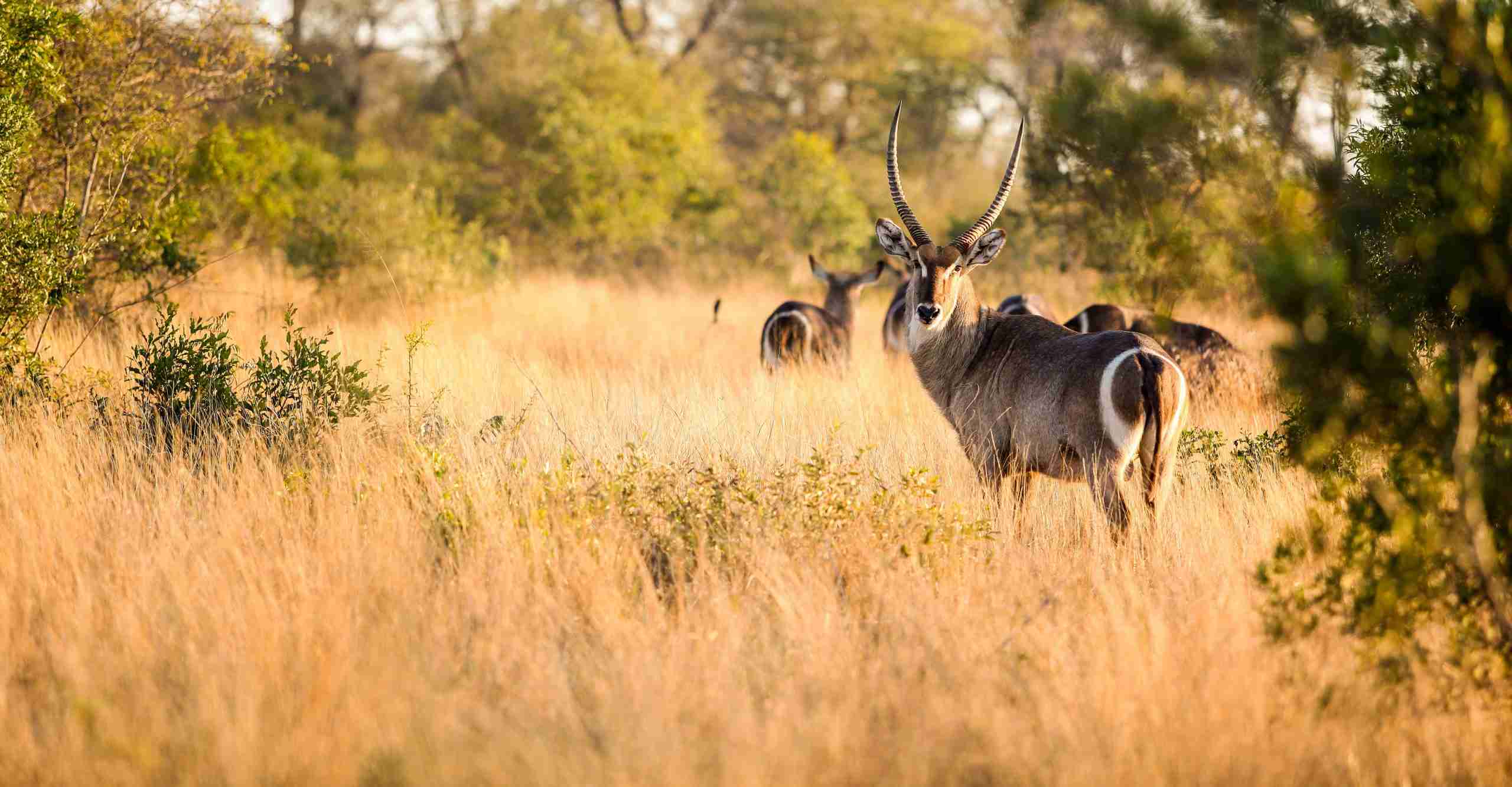
The Waterbuck is a large, robust antelope with long, shaggy hair and a brown-grey coat.
As the name suggests, these animals are very water-dependent and will never be seen too far from a permanent water source. They have been known to evade predators by rushing into the water.
The trademark white ring around the waterbucks’ hindquarters is used as a follow-me sign. If one of the group spots a predator and runs, the rest know where to follow.
They can reach a height of 1.3 m and weigh almost 260 kg.
Waterbuck have a lot of hair around their necks, making them look as if they should be living in much colder climates, but there is a functionality to this hair as it is all hollow. The hollow hair allows for extra buoyancy when swimming, helping the waterbuck to keep their heads above the water. Their coat emits an oily secretion from its sweat glands, which acts as a water repellent.
The males have spiral horns that are long and curve backwards and forward and can reach a length of 99cm. Waterbuck horns will begin to develop at around 8 to 9 months and mark the young buck’s time to separate from the herd. Young males form bachelor groups and remain together until they mature and move on to make their own herd. They are social animals and form herds of 6 to 30 individuals.
There are about 200 000 Waterbucks in the wild and they could live up to 30 years of age.
After a gestational period of 8 months, the ewe gives birth to a single calve which she hides for two to four weeks. Waterbuck calves mature slower than other antelopes.
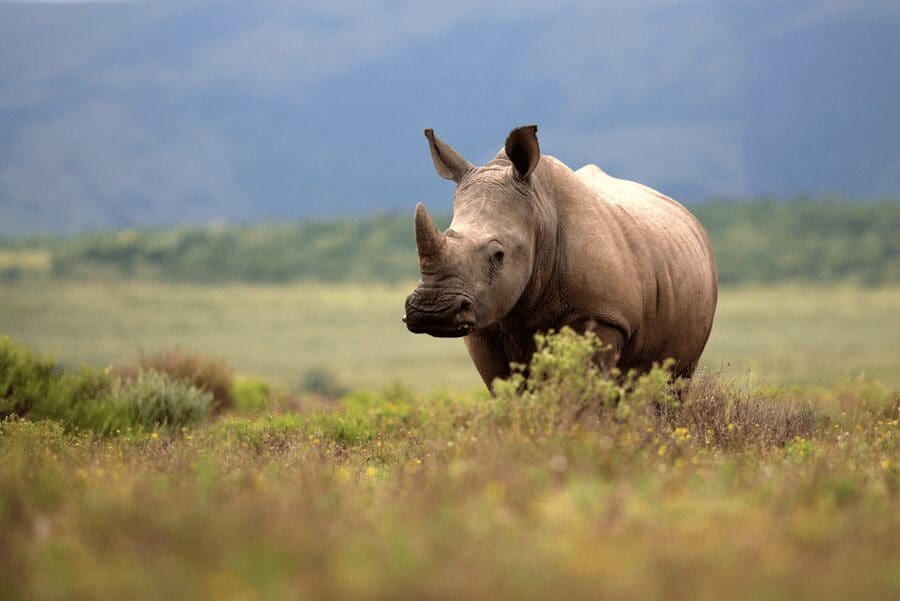
White Rhino
Group: Crash
Family: Rhinocerotidae
White rhinos are the second-largest land mammal. Their name originated from the Afrikaans’ word wyd, meaning wide and refers to the Rhino’s mouth, which has a square upper lip.
There are two different subspecies, the northern and southern White Rhino, and are found in two different regions in Africa. As of March 2018, there are only 2 Northern White Rhinos left, both of which are female. Their near extinction is due to decades of extensive poaching for Rhino horn.
Southern White Rhinos were thought to be extinct in the 1800s, but in 1895 a population of almost 100 rhinos were discovered in Kwazulu-Natal, South Africa. After more than a century of protection, they are now classified as Near Threatened and around 18,000 rhinos live in protected reserves.
Adult males defend territories of roughly 2.5 km2, which they mark with dung piles. Breeding females are prevented from leaving a dominant male’s territory, which is marked and patrolled by the bull on a regular basis.
When the urine test (sensed through scent glands) reveals a cow is approaching oestrus, the territorial bull will join the female for up to 20 days. He first accompanies the female by keeping a fair distance, until she comes into full oestrus and allows him to approach. The courtship lasts up to a day, characterised by the male resting his chin on the female’s rump and attempting mounting. Finally, the cow will standstill, with her tail curled, and allow copulation. Mating lasts from 20 minutes to one hour.
Adult males can weigh up to 2,500 kg and reach a height of almost 1.8 m. Rhinos can run up to 40 km/h and could live up to 50 years of age.
White rhinos can communicate vocally, using a wide range of sounds. They need water for drinking only every 2-4 days but will wallow in the mud or dust, to cool down, and protect their skin from the sun and insects.
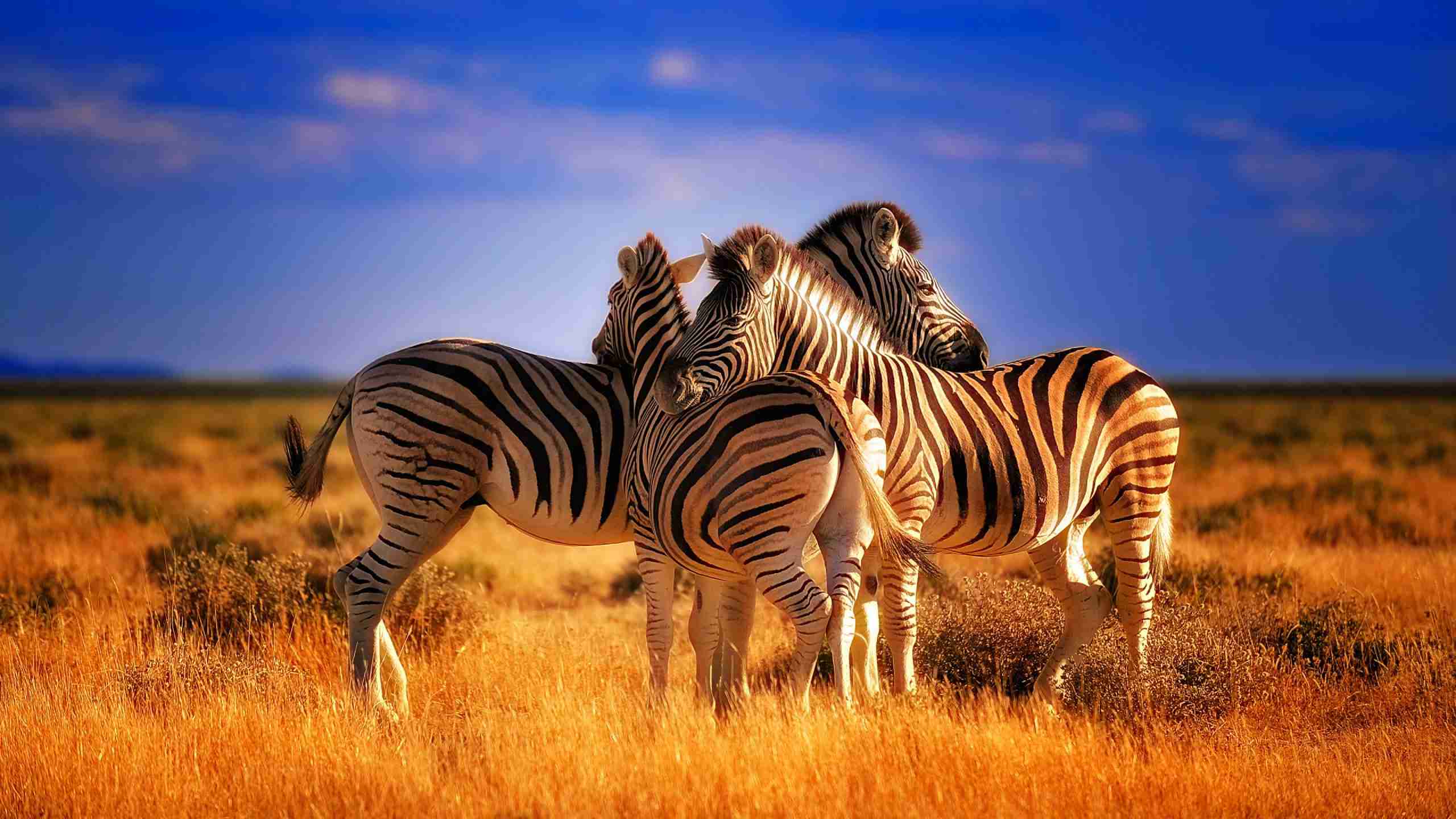
Zebra
Group: Dazzle
Family: Equidae
There are three main species of Zebras: Grevy, Mountain and Plain.
The Plain Zebra is the most common species of which there are 6 subspecies and their habitat can be found all over the southern and eastern parts of Africa. The Grant Zebra, Half-maned Zebra, Burchell Zebra, Damara Zebra, Chapman Zebra, Crawshay Zebra and the Quagga zebra (which is now extinct).
The Mountain Zebra is native to mountainous regions of southwestern Africa. They are on the Endangered Species list with only a population of 2,700 in the wild.
There are an estimated 2,500 Grevy Zebras left in the wild and can be found in small areas of Kenya and Ethiopia.
Zebras are quite fast mammals that can run up to 65 km/h.
A Zebra’s distinctive striped fur is said to reduce 70% of its body’s incoming heat, ensuring that they don’t overheat under the harsh African sun.
A known fact of these stripes is that they assist the species in survival, confusing predators and camouflaging them within the long grass, however, recent studies conclude that it also confuses biting insects – keeping away mosquitos, flies and fleas.
A Zebra’s stripes are like human fingerprints. No two are alike, and it is exactly due to this fact that a newborn foal is able to recognize its mother.
Did you know that only six minutes after being born foals can stand, after 20 minutes they can walk and from 40 minutes to an hour they can run?
Zebras sleep standing and only sleep within the safety of their group. Ensuring that they can escape quickly when predators do arrive.